The Publishing Times
All the News That’s Fit to Publish
publishing-news · Guides
Philippe Jaenada Says He Used AI in His Prix Goncourt Novel
Philippe Jaenada told France Inter he used AI three times in L'Inconnue du quai de Javel, including a hidden ChatGPT sentence, after winning the prix Goncourt.
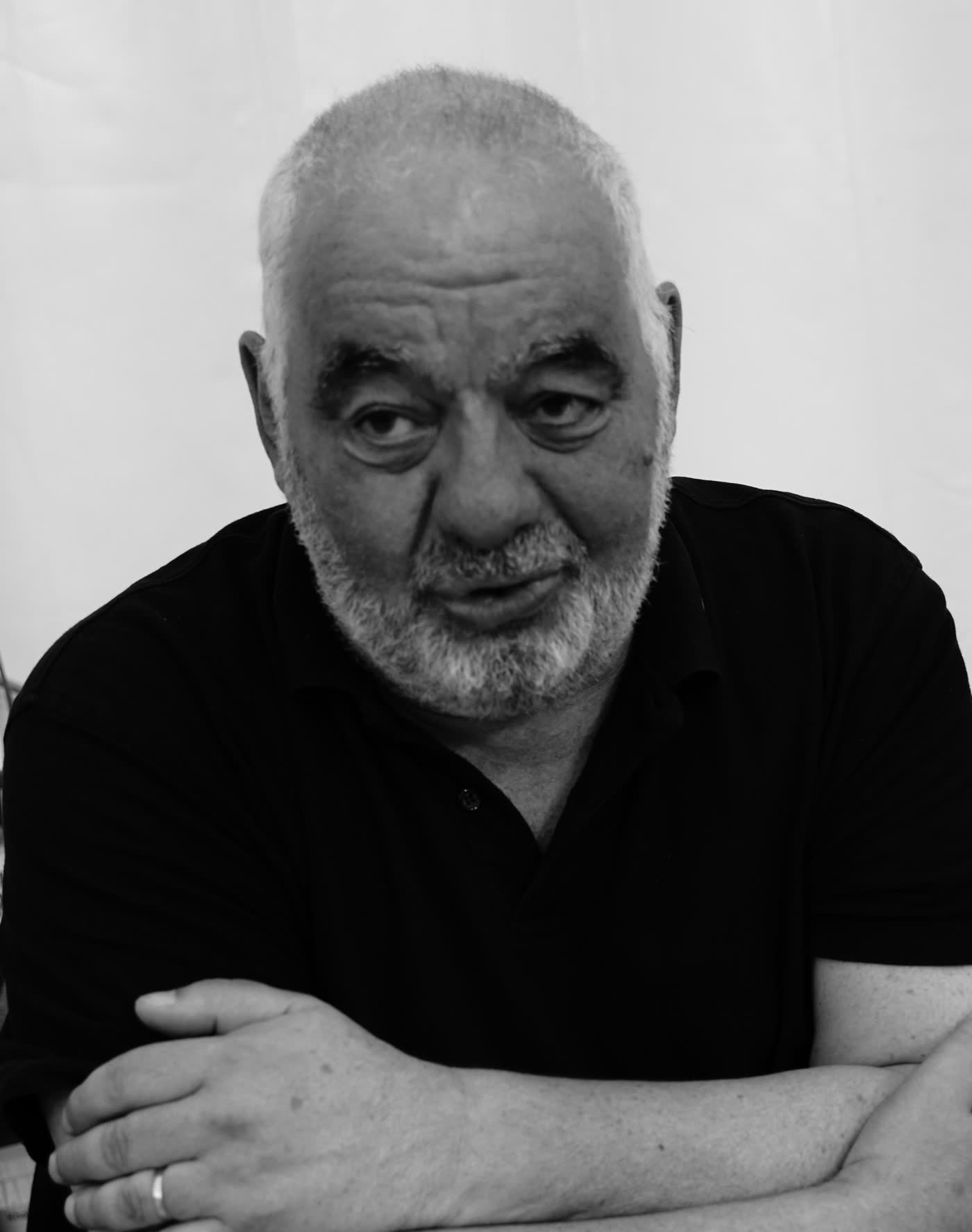
Philippe Jaenada told France Inter he used artificial intelligence three times while writing L'Inconnue du quai de Javel (Flammarion), the novel that won him the prix Goncourt. France Inter reported the interview on 4 November 2026. The page dates the prize to 3 November. The Guardian reported the admission on 5 November 2026. PT reported the win.
What he said he did
France Inter says that, asked about the Thélyson Orélien affair, Jaenada said he had used artificial intelligence "trois fois" in the book. It quotes him: "Une fois, pour jouer avec les lecteurs, j'ai caché une phrase de ChatGPT dans le livre." A second use, it quotes, was "Une autre fois pour me moquer de ChatGPT, qui nous fait des réponses complètement absurdes." The third, it quotes, was "une autre fois où il m'a réellement aidé pour des recherches."
The Guardian, reporting that radio interview, said the first use was to slip in a sentence written by ChatGPT in order to "play with the reader." It said he had revealed which sentence it was only to the Goncourt jurors, on the day of the award, and quoted him: "If it gets out, I'll know where it came from." It said he also included a section of AI-generated text to poke fun at ChatGPT, which gave "completely absurd answers about a technical detail," and that he used it for research.
On whether the technology can be kept out of the work, France Inter quoted him: "On ne peut pas refluer l'IA, faire comme si ça n'existait pas." And: "Il faut s'en servir, mais d'abord, il faut le reconnaître et puis surtout, il faut l'apprivoiser, c'est-à-dire ne pas se faire remplacer." And: "Il faut qu'elle nous soit utile." The Guardian reported a parallel remark as "I don't think AI can be held back." And: "We can't pretend it doesn't exist." And: "You have to use it." And: "but first you have to acknowledge it, and above all you have to tame it." And: "It has to be useful." The Guardian gives his age as 62.
What he had said before the prize
The Guardian reported that Jaenada had defended using AI before the award. In an interview with 20 Minutes, it says, he asked: "Would a film director hide the fact that he uses special effects?" It says he predicted that it would soon be impossible to say a text was 100% human-written, and that he insisted AI "will never be able to write a book with its heart, its soul, its memories."
The book the academy removed
The admission follows the Académie Goncourt's removal of a different novel, which the Guardian recounts in the same piece. It says the academy removed Thélyson Orélien's C'était ça ou Mourir (It Was That or Die) from its longlist in September. It calls the Canadian-Haitian writer's debut the breakout hit of France's rentrée littéraire, which it defines as the period between late August and early November when many books are published in France. It says the novel sold more than 35,000 copies and won the Prix du roman Fnac before the journalist Samuel Fitoussi ran it through the AI-detection tool Pangram and concluded that much of it had been machine-generated. The Guardian adds that the accuracy of AI-detection software has been called into question.
In a statement on 25 September, the Guardian reported, the academy said analyses by researchers and journalists showed the novel was "in all likelihood very largely the product of an artificial intelligence." It said the academy wanted to protect the integrity of a prize that exists to honour "literature written by women and men," and to send "a clear message" that it did not endorse texts generated with the help of AI.
In an October statement, the Guardian reported, Orélien described the allegations as "slander and heresy" and said "not a single sentence in this book was created by a machine." It says that in the same statement he admitted plagiarism in earlier work, apologising for claiming "as my own texts that are not mine." It says that the following week his Canadian publisher, Boréal, said new evidence showed AI had been used in the writing process, contrary to the author's repeated assurances, and ended its relationship with him. PT reported the removal and the publisher's break when those happened.
The reaction the Guardian recorded
The Guardian reported that the contrast has prompted some accusations of a racial double standard online. It quotes one user on X: "So when it's an old white man it's fine, but when it's a young writer of colour he gets stoned in the public square?" It says another wrote that Jaenada had faced "no media lynching, no banishment" over his use of AI, "a leniency denied to Thélyson Orélien."
The prize
The Guardian reported that Jaenada won on the first round, by six votes to three over Sylvain Prudhomme's De l'autre côté du lac (The Other Side of the Lake). It says the book reconstructs the unsolved 1949 murder of Louise Cansot, a 29-year-old Breton artists' model known in Montparnasse as "the woman with 100 portraits." It says the Académie Goncourt, presided over by the novelist Philippe Claudel, has been approached for comment.
Photo: Philippe Jaenada at Livre sur la Place in September 2024. Photo by Gérald Garitan, via Wikimedia Commons, CC BY-SA 4.0.
