The Publishing Times
All the News That’s Fit to Publish
publishing-news · Guides
Philippe Jaenada Wins the 2026 Prix Goncourt for L'Inconnue du quai de Javel
Jaenada's investigation of a 1949 Paris murder took the Goncourt by six votes to three. Minutes later the Renaudot went to François-Henri Désérable for Le Palais.
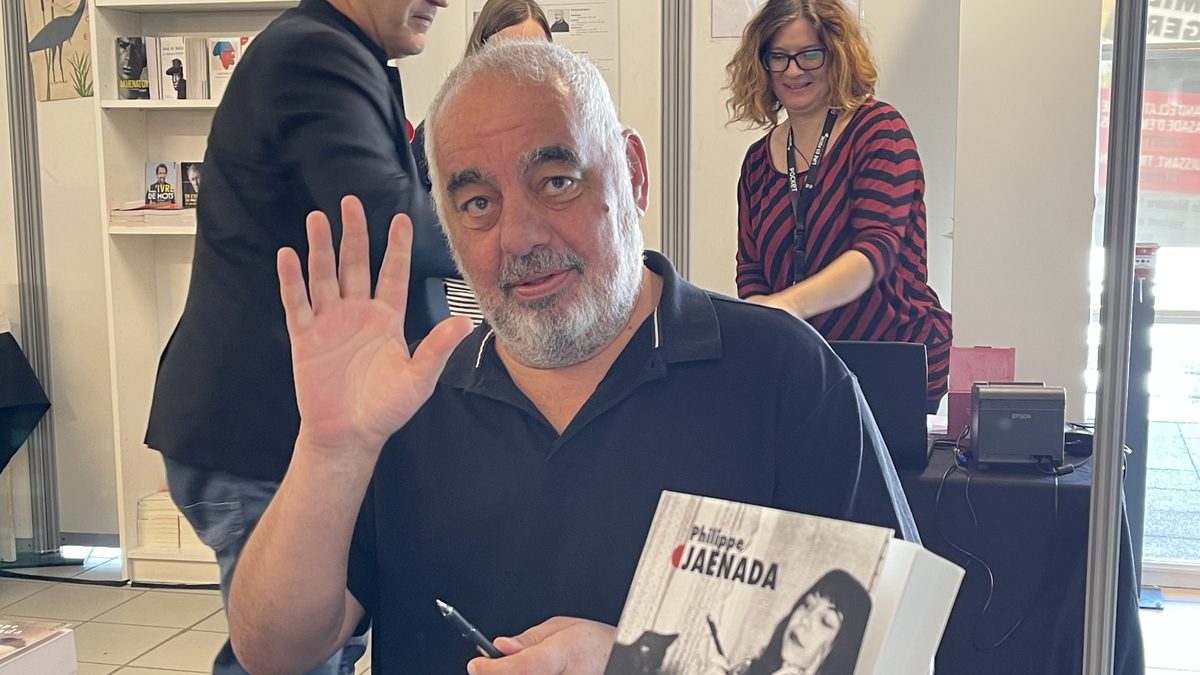
Philippe Jaenada has won the prix Goncourt with L'Inconnue du quai de Javel (Flammarion), his dig into a Paris murder nobody ever solved. The result came on Tuesday, November 3. The Académie Goncourt named him at the Drouant restaurant, and Livres Hebdo reported that he beat Sylvain Prudhomme's De l'autre côté du lac (Minuit) in the vote. It was six to three, according to the trade weekly. The jury had nine members rather than the usual ten, after Didier Decoin's death in August.
Jaenada, 62, takes over from Laurent Mauvignier, who won last year with La Maison vide (Minuit). He already had a Femina, awarded in 2017 for La Serpe.
A cold case from 1949
Louise Cansot was a young Breton woman who ended up posing for Montparnasse painters. She was 29 when they found her body on the quai de Javel, by the Seine, one night in September 1949. Four suspects, no charges, case closed.
Seventy-odd years on, Jaenada went back to it. ActuaLitté reports that he set himself an odd rule for the investigation: read every one of Georges Simenon's Maigret novels and work the way the inspector would. Court archives, old newspapers and trips to the places in the story fill out the rest, along with the long digressions his readers know well. He ends up offering his own theory of who killed her.
He has been working this seam for over ten years now. In Sulak (2013) it was the robber Bruno Sulak; in La Petite Femelle, Pauline Dubuisson; in La Serpe, the triple killing at the château d'Escoire. Before all that, his debut Le Chameau sauvage won him the prix de Flore in 1997.
L'Inconnue du quai de Javel came out on August 12 and runs to 528 pages. Livres Hebdo puts sales so far at close to 60,000 copies. The prize itself is worth just €10, but the red Goncourt band on the cover usually means a big jump in sales before the holidays. ActuaLitté, citing Edistat, says La Maison vide is nearing 570,000 copies.
One group, four finalists
The other two finalists were Yannick Haenel's La solitude des professeurs est infinie (Gallimard) and Clémentine Mélois's Choses que je croyais perdues (L'Arbalète/Gallimard). All four books on the final list come from houses in Madrigall, Antoine Gallimard's group, which owns Flammarion and Minuit as well as Gallimard. That made the result a sure thing for one company before the jury even sat down.
This year's prize was also shaped by the case of Thélyson Orélien. In September the academy pulled his novel C'était ça ou mourir (Grasset) from its first list after accusations of plagiarism and AI use, and its president Philippe Claudel later said the remaining titles had been put through an AI detector.
The Renaudot, a few minutes later
The Renaudot jury, which announces at Drouant right after the Goncourt, gave its 2026 prize to François-Henri Désérable for Le Palais (Gallimard). ActuaLitté reported that he won six votes to four against David Djaïz's La Méthode (Stock).
The novel follows Arun Kumar, an Indian boy adopted at eight by a couple in Beaune, in Burgundy. He turns out to have a perfect palate, and the gift takes him from the family restaurant into the world of great wines, and then to the United States, where talent and fraud start to blur. Désérable, born in Amiens in 1987, played ice hockey before he turned to writing. He won the Grand Prix du roman de l'Académie française in 2021 for Mon maître et mon vainqueur.
This was the Renaudot's 100th year. Journalists founded it in 1926 while they waited for the Goncourt result, and Frédéric Beigbeder chaired this year's jury. In the essay category, Télérama reported, the jury split the prize between Jean-Paul Enthoven for Dictionnaire amoureux du bonheur (Plon) and Christophe Ono-dit-Biot for L'odyssée de l'Odyssée (Grasset). Enthoven's win comes after ActuaLitté reported many similarities between his book and two books by the philosopher Frédéric Schiffter, who says he was borrowed from without enough credit. Enthoven had said he may have cited Schiffter too little and would add quotation marks in a new printing.
Photo: Philippe Jaenada at the Lire en Poche book fair in 2021. Photo by ActuaLitté, via Wikimedia Commons, CC BY-SA 2.0.
