The Publishing Times
All the News That’s Fit to Publish
publishing-news · Guides
Authors Sue Meta as Individuals Over Book Scanning
On October 19, two complaints in the Northern District of California named 60 and 57 authors suing Meta Platforms. They want a jury to set statutory damages, and they allege a book-scanning operation called Project Vellum.
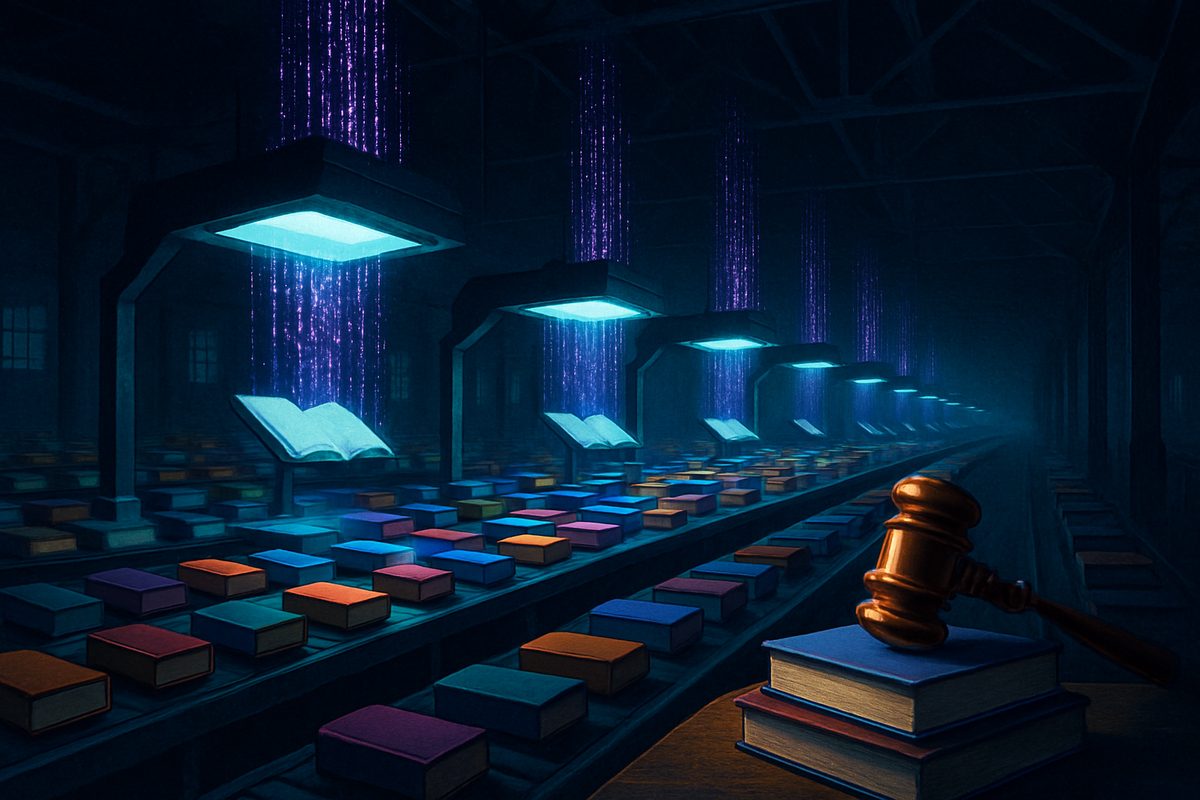
What did these authors file on Monday? Two copyright complaints against Meta Platforms, brought as individual suits. On October 19, 2026, Stris & Maher LLP and Freedman Normand Friedland LLP filed them in the Northern District of California. Meta had not filed a response. These are allegations.
The Winspear complaint is Winspear et al. v. Meta Platforms, Inc., No. 3:26-cv-12100. It names 60 plaintiffs, including Jacqueline Winspear and Reyna Grande. The Older complaint is Older et al. v. Meta Platforms, Inc., No. 3:26-cv-12115, with 57 named plaintiffs led by Daniel José Older. It makes the same allegations, including the scanning operation the filings call Project Vellum. The Winspear lawyers are Elizabeth Brannen and Lauren Martin of Stris & Maher, and Kyle Roche of Freedman Normand Friedland, whose pro hac vice admission is forthcoming. The Older complaint is brought by the same firms. Dockets: Winspear and Older. More on the company is on our Meta page.
Other suits against Meta were filed in that court the same day. Their complaints are not yet public.
A jury, author by author
Paragraphs 14 to 16 of the Winspear complaint say the plaintiffs elect to sue on their own because the Copyright Act gives them individualized statutory damages, determined by a jury. They want to avoid, in the complaint's words, "having their rights diluted by being swept into sprawling class-action settlements structured to resolve claims for pennies on the dollar." It cites Feltner v. Columbia Pictures Television, Inc., 523 U.S. 340, 353 (1998), for the line that "the amount of statutory damages is a question for the jury," and says statutory damages and fee awards let authors sue without a class.
Shadow libraries, then Project Vellum
The Winspear complaint pleads four counts. Count I is direct infringement by pirated copies from shadow libraries, under 17 U.S.C. § 501. Count II is direct infringement through Project Vellum, also under § 501. Count III is contributory infringement. Count IV is removal of copyright management information under 17 U.S.C. § 1202(b)(1).
The example is Jacqueline Winspear, who the complaint says lives in Washington and writes the Maisie Dobbs novels. One or more of her works are in Books3 (and thus The Pile), LibGen, Z-Library, and Anna's Archive. The complaint pleads a reasonable inference that Meta downloaded them, and says the books were for sale in print while the scanning ran.
Citing interrogatory responses in other litigation, including Chicken Soup for the Soul v. Meta, No. 3:26-cv-02333-VC, the complaint says Books3 (internally "b3g") trained Llama 1, Llama 2, Llama 3, and Llama 4; LibGen Scitech and Fiction trained Llama 3 and Llama 4; and a Z-Library set, taken by torrenting Anna's Archive, trained Llama 4. It says a Meta engineer started downloading both LibGen branches in or about spring 2023 and that the downloads "are believed to have been substantially complete." On information and belief, it adds, Meta, like Anthropic, kept pirated copies that were not tied to a specific training use. Torrenting, the complaint says, also uploaded file pieces, which is its contributory theory, and Meta stripped copyright management information from the pirated copies.
Project Vellum is pleaded as a second act, after the piracy. Paragraph 9, which the Older complaint repeats, says that beginning in or around mid-2025, after Meta had been sued repeatedly for training Llama on pirated books, Meta bought physical books in bulk, scanned them, ran optical character recognition, and used the text to train its Muse models. The complaint says Meta introduced Muse Spark in April 2026 and released Muse Glimmer in August 2026. It says Meta has admitted, in the interrogatory responses, that books scanned for Project Vellum trained the Muse Spark family, and it also points to filings in Entrepreneur Media v. Meta, No. 25-cv-09579-VC. The responses, as the complaint quotes them, say the books were "first scanned into digital form and then run through OCR," then "de-duplicated, processed and cleaned."
The complaint's argument is that the purchase conveyed the copy and stopped there. It cites 17 U.S.C. § 202, § 109(a), and § 106(1): owning the object is not owning the copyright, first sale does not include the right to reproduce, and reproduction belongs to the copyright owner. It says Meta did not seek a license. Whether these plaintiffs' own books were scanned is pleaded on information and belief. On the notices, the complaint draws a contrast. It alleges the notices were stripped from the pirated downloads. For the purchased books, it says Meta admitted that "copyright-related information from these purchased books was not filtered out before being used for model training."
The complaint also alleges lost license fees and models able to compete with the plaintiffs' books. It quotes a U.S. Copyright Office report, Copyright and Artificial Intelligence, Part 3, warning that "the speed and scale at which AI systems generate content pose a serious risk of diluting markets for works of the same kind as in their training data."
What the prayer asks for
The Winspear prayer asks for declarations that Meta infringed, that the infringement was willful, and that Meta violated § 1202(b) by removing copyright management information, plus an injunction and statutory damages. The plaintiffs demand a jury trial. The complaint is dated October 19, 2026.
Why it matters for authors
The plaintiffs want a jury to set statutory damages one author at a time. The fear they plead, which no court has adopted, is a class settlement that ends claims "for pennies on the dollar." On the scan, the complaint says a retail copy pays for one reader and does not buy the right to digitize the work for a commercial model. For these authors, inclusion in that scan is alleged on information and belief. Meta had not answered.
PT has covered the publishers' copyright suit against Meta, now in California, the National Writers Union's condemnation of AI book scanning, the Anthropic settlement allocation window, and BISG's ONIX flags for AI involvement and human authorship. See also the National Writers Union and BISG pages.
Sources
- Complaint, Winspear et al. v. Meta Platforms, Inc., No. 3:26-cv-12100 (N.D. Cal. Oct. 19, 2026), ECF No. 1: PDF
- CourtListener: Winspear v. Meta Platforms, Inc. docket
- Complaint, Older et al. v. Meta Platforms, Inc., No. 3:26-cv-12115 (N.D. Cal. Oct. 19, 2026), ECF No. 1: PDF
- CourtListener: Older v. Meta Platforms, Inc. docket