The Publishing Times
All the News That’s Fit to Publish
industry · Guides
How Big Publishing Deals Work: Advances, Auctions, and What They Mean for Authors
Seven-figure advances, competitive auctions, and international co-publishing deals are shaping the 2026 publishing landscape.
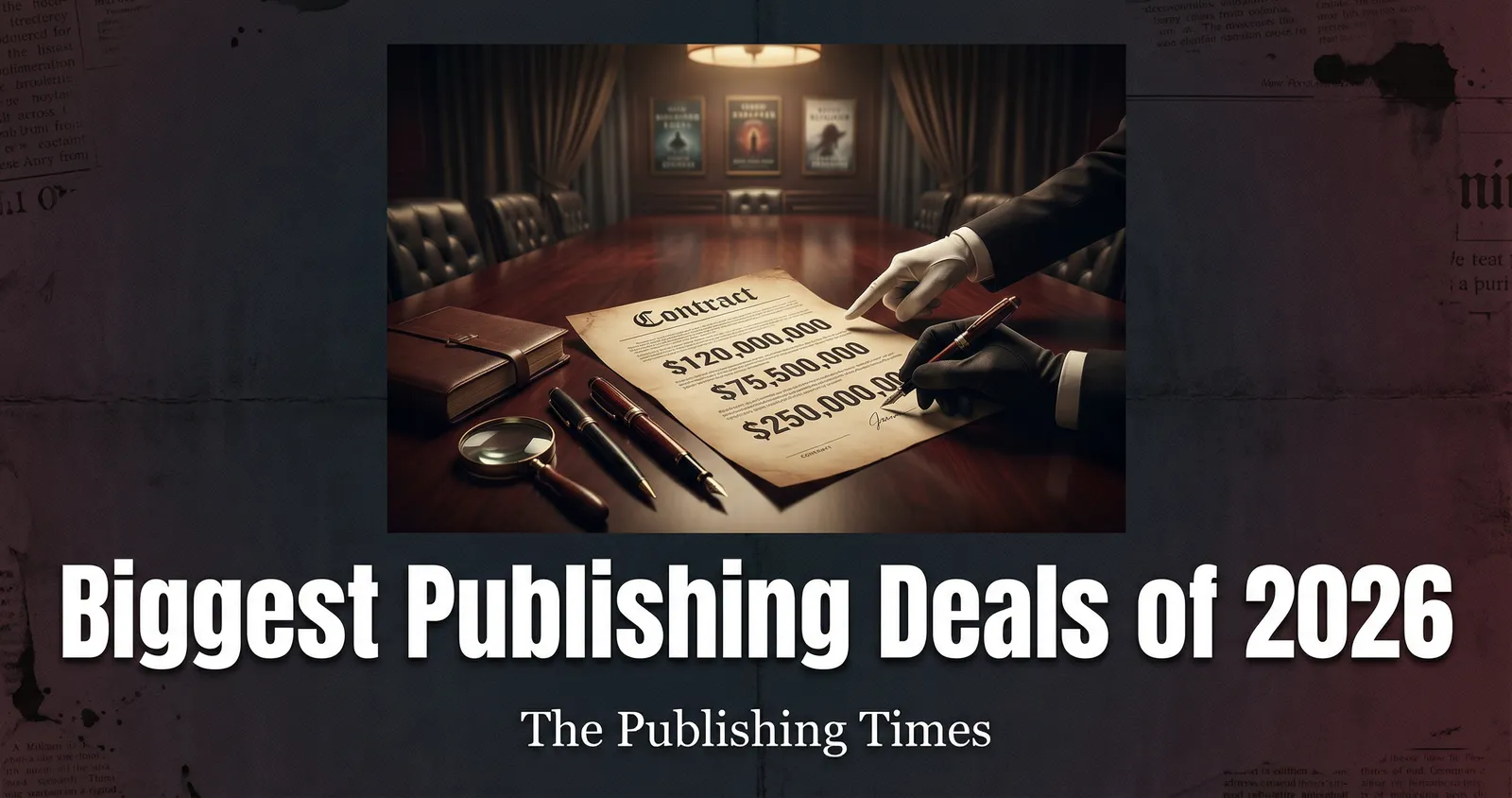
How Big Publishing Deals Work: Advances, Auctions, and What They Mean for Authors
The largest publishing deals are a bellwether for the evolving literary landscape, reflecting shifts in reader interest, technological advancements, and the enduring power of compelling narratives. These high-stakes agreements, often involving multi-million dollar advances and intense bidding wars, dictate the future of bestsellers and shape the careers of authors.
Table of Contents
- Understanding the Publishing Deal Landscape in 2026
- The Anatomy of a Blockbuster Book Deal: Advances and Royalties Explained
- Navigating the Auction Block: How Bidding Wars Drive Value
- Case Studies: Landmark Deals of 2026 and Their Impact
- Strategies for Authors: Positioning a Manuscript for Success
- The Future of Publishing Deals: Trends and Predictions
- Checklist: Maximizing a Manuscript's Marketability
Understanding the Publishing Deal Landscape in 2026
The publishing industry in 2026 is a dynamic ecosystem, shaped by evolving reader habits, technological innovations, and a constant search for compelling narratives. The biggest publishing deals are not just financial transactions; they are strategic investments by publishers in authors and their stories, reflecting market confidence and anticipated cultural impact. Understanding this landscape is important for any author aiming to navigate the complexities of securing a lucrative book deal.
The Rise of Hybrid Publishing Models
Hybrid publishing, once a niche alternative, has matured into a significant force in 2026. This model, which combines elements of traditional and self-publishing, offers authors more control and a larger share of royalties, often in exchange for an upfront investment. Major publishing houses are increasingly exploring hybrid imprints or partnerships to attract established authors seeking greater autonomy and a faster route to market. This shift has created a competitive environment where traditional deals must offer increasingly attractive terms to secure top talent. For instance, authors with a strong existing platform and a proven track record of sales are finding themselves in a powerful negotiating position, often able to command higher advances and more favorable royalty splits by leveraging the potential of hybrid offers.
The Impact of AI and Automation on Deal Valuation
Artificial intelligence (AI) and automation are no longer futuristic concepts but integral tools in the publishing industry of 2026. AI-powered analytics are being used to predict market trends, identify emerging genres, and even assess the commercial viability of manuscripts. This data-driven approach allows publishers to make more informed decisions, influencing the valuation of potential deals. Authors who can demonstrate a strong understanding of their target audience, perhaps through their own data collection or engagement strategies, may find their work more appealing to publishers equipped with these advanced analytical tools. Furthermore, AI is streamlining production processes, from editing to marketing, which can reduce costs and potentially increase the profitability of a book, thereby justifying larger advances for promising projects.
Global Market Expansion and Rights Acquisition
The global appetite for diverse stories continues to drive significant publishing deals in 2026. Publishers are actively seeking manuscripts with international appeal, leading to more aggressive bidding for world rights and translation rights. This trend is particularly evident in genres like fantasy, science fiction, and literary fiction, where stories often transcend cultural boundaries. Authors with a global perspective or those whose work resonates with diverse audiences are finding themselves at an advantage. The expansion into new markets, particularly in Asia and Africa, presents lucrative opportunities for publishers, and authors who can tap into these emerging reader bases are highly sought after. This global outlook means that a book's potential is no longer limited to its domestic market, significantly increasing its overall value in the eyes of acquiring editors.
The Anatomy of a Blockbuster Book Deal: Advances and Royalties Explained
Securing a blockbuster book deal is often the dream of many authors, but understanding the intricate financial mechanisms behind these agreements is important. The biggest publishing deals are characterized by substantial advances and carefully negotiated royalty structures, which together determine an author's earning potential. Demystifying these components is essential for authors to make informed decisions and advocate for their work effectively.
What is an Advance and How is it Calculated?
An advance is an upfront payment made by a publisher to an author against future royalties. It's essentially a prepayment for the right to publish the author's work. The size of an advance is influenced by several factors, including the author's previous sales history, the perceived market potential of the manuscript, the publisher's acquisition budget, and the intensity of the bidding process. For debut authors, advances might range from a few thousand to tens of thousands of dollars, while established authors with proven bestsellers can command six-figure or even seven-figure advances. For example, a highly anticipated memoir from a public figure with a massive social media following might secure a multi-million dollar advance due to its guaranteed market reach and pre-existing audience engagement. Publishers often calculate advances based on projected sales figures, aiming to recoup the advance through book sales before the author starts earning additional royalties.
Understanding Royalty Structures and Escalators
Royalties are the percentage of a book's sales revenue that an author receives after the advance has
been earned out. Traditional royalty rates typically range from 10-15% for hardcover, 7.5-10% for trade paperback, and 25% for ebooks. However, in blockbuster deals, authors often negotiate for higher percentages or royalty escalators. An escalator means that the royalty rate increases once a certain sales threshold is met. For instance, an author might receive 10% on the first 10,000 copies sold, 12.5% on the next 20,000, and 15% thereafter. These escalators are a powerful incentive for authors and can significantly increase their long-term earnings, especially for books that become runaway successes. The negotiation of these percentages is a critical aspect of any major deal, as even a small increase can translate into substantial income over the lifetime of a book. The Publishing Times notes that authors with strong literary agents are often better positioned to secure these favorable terms, as agents possess deep industry knowledge and negotiation expertise.
Subsidiary Rights: The Hidden Value of a Book Deal
Beyond print and ebook sales, a book's true financial potential often lies in its subsidiary rights. These include film and television adaptation rights, foreign language translation rights, audio rights, merchandising rights, and even serialization rights. In the largest publishing deals, the negotiation of subsidiary rights is essential, as these can generate significant additional income for both the author and the publisher. For example, a book optioned for a major streaming series can bring in a substantial sum, often separate from the initial book advance. Authors and their agents meticulously carve out these rights, sometimes retaining certain rights while licensing others to the publisher. The value of these rights can vary wildly depending on the book's genre, its potential for adaptation, and the author's platform. A well-known author with a highly visual story, for instance, might see their film rights alone command a seven-figure sum. Understanding and strategically managing subsidiary rights is a hallmark of successful authors and their representatives in today's publishing landscape.
Navigating the Auction Block: How Bidding Wars Drive Value
For highly sought-after manuscripts, the path to a publishing deal often leads to an auction. This competitive process, where multiple publishers bid for the rights to a book, can significantly drive up advances and secure more favorable terms for authors. Understanding how to navigate the auction block is a critical skill for authors and their agents aiming for the largest publishing deals.
The Role of the Literary Agent in Orchestrating an Auction
The literary agent is the maestro of the book auction. Their expertise in identifying promising manuscripts, crafting compelling submission packages, and strategically approaching editors is essential. A skilled agent knows which editors at which houses are most likely to connect with a particular project, and they can leverage these relationships to generate initial interest. Once multiple editors express enthusiasm, the agent can then initiate an auction, setting deadlines for bids and managing the communication between all parties. This process is not merely about securing the highest advance; it's also about finding the right editorial home for the book, a publisher who shares the author's vision and has the marketing muscle to make the book a success. According to industry veterans, a well-orchestrated auction can increase an author's advance by 50% or more compared to a single-offer negotiation.
Understanding the Bidding Process: Rounds and Offers
Book auctions typically unfold in several rounds. An agent will first send the manuscript to a select group of editors, often referred to as
the
“first pass.” If multiple editors express strong interest, the agent will then set a deadline for initial offers. These offers typically include an advance amount, proposed royalty rates, and a marketing plan. Based on these initial offers, the agent might go back to the most interested parties, asking for revised bids or
further details. This can lead to several rounds of bidding, with publishers increasing their advances and improving their terms to secure the book. The agent's skill in managing these rounds, creating a sense of urgency, and leveraging competitive interest is important to maximizing the deal for the author. It's a delicate dance of negotiation, where timing and strategic communication play a significant role in achieving the best possible outcome. The Publishing Times has observed that authors with a strong social media presence or a unique story often generate more intense bidding wars, as publishers see a clear path to marketing success.
The Psychology of the Auction: Why Publishers Bid High
Publishers participate in auctions for a variety of reasons, often driven by a combination of commercial potential, editorial passion, and competitive pressure. When a manuscript generates significant buzz, editors can become deeply invested, seeing it as a potential bestseller or a prestigious addition to their list. The fear of missing out on the next big thing can also drive up bids, especially when rival houses are involved. Furthermore, acquiring a high-profile book can boost a publisher's reputation, attract other talented authors, and generate significant media attention. While financial projections are always a factor, the emotional investment of editors and the strategic importance of a particular book can lead to advances that seem astronomical. These largest publishing deals are often a testament to a publisher's belief in a book's long-term impact and its ability to capture the cultural zeitgeist. It's a calculated risk, but one that can yield immense rewards if the book performs as expected.
Steps Toward a Larger Deal
Learn how to build a powerful author platform that attracts readers and publishers, making your work irresistible.
→ Get it on AmazonStep 1 of 5: Master the Craft and Polish the Manuscript
Before anything else, the quality of the manuscript must be impeccable. This means not only compelling storytelling or insightful non-fiction but also meticulous editing and proofreading. Publishers are inundated with submissions, and a manuscript riddled with errors or lacking narrative cohesion will quickly be dismissed. Authors are advised to invest in professional editing, seek feedback from trusted beta readers, and revise relentlessly. A polished manuscript demonstrates professionalism and respect for the reader and the publisher's time. Writing workshops and critique groups offer a way to hone skills and gain diverse perspectives on the work. The Publishing Times emphasizes that even the most brilliant concept can be undermined by poor execution.
Step 2 of 5: Understand the Genre and Target Audience
Knowing where a book fits in the market is important. That means researching the genre thoroughly, identifying comparable titles, and understanding the expectations of the target audience. The core questions are who the book is written for, what other books those readers buy, and how the book stands out. The answers inform the pitch, the marketing strategy, and even the choice of literary agent. Publishers are looking for books that fill a specific market need or appeal to a clearly defined readership. An author who can articulate a book's place in the literary landscape demonstrates commercial awareness and makes the project more attractive. For instance, a fantasy novel needs to show how it innovates within the genre while still appealing to established fantasy readers.
Step 3 of 5: Build a Robust Author Platform
An author platform refers to a writer's visibility and reach. This includes social media presence, a website, newsletter subscribers, media contacts, and any existing audience the author can bring to the book. For the largest publishing deals, a strong platform can be a significant differentiator, especially for non-fiction authors. Publishers see a platform as a built-in marketing advantage, reducing their risk and increasing the book's sales potential. Platform building is best started long before an author seeks a publishing deal, through reader engagement, authority within a niche, and a professional online presence. Even for fiction authors, a dedicated readership can significantly enhance appeal to agents and editors.
Step 4 of 5: Craft a Compelling Query Letter and Proposal
The query letter (for fiction) or book proposal (for non-fiction) is an author's first impression. It must be concise, professional, and compelling, clearly articulating the book's concept, target audience, and market potential. For non-fiction, a comprehensive proposal includes a detailed outline, sample chapters, a marketing plan, and an author bio highlighting the author's expertise. For fiction, the query letter should hook the agent immediately and provide a brief, intriguing synopsis. Meticulous attention to detail and precise adherence to submission guidelines are essential. A well-crafted query or proposal can open doors, while a sloppy one can close them instantly. Many successful authors attribute their initial breakthrough to a perfectly executed submission package.
Step 5 of 5: Secure a Reputable Literary Agent
While not strictly mandatory, securing a reputable literary agent significantly increases an author's chances of landing a major publishing deal. Agents have established relationships with editors, understand market trends, and possess invaluable negotiation skills. They act as the author's advocate, guiding the author through the complexities of contracts, advances, and subsidiary rights. The strongest candidates are agents who represent authors in the same genre and whose vision aligns with the author's own. A good agent can transform a promising manuscript into a blockbuster deal, securing the best possible terms and support throughout the author's publishing career. The Publishing Times consistently advises authors to seek agent representation for traditional publishing aspirations, as their expertise is often invaluable.
The Future of Publishing Deals: Trends and Predictions
The publishing industry is in a constant state of evolution, and the largest publishing deals offer a glimpse into what the future holds. Several key trends are emerging that will continue to shape how books are acquired, valued, and brought to market in the coming years.
The Growing Influence of Direct-to-Consumer Models
Publishers are increasingly investing in direct-to-consumer (D2C) models, building stronger relationships with readers through their own platforms, newsletters, and online communities. This shift is driven by a desire to gather first-party data, reduce reliance on third-party retailers, and cultivate brand loyalty. For authors, this means that demonstrating an ability to engage directly with readers and contribute to a publisher's D2C efforts could become a significant asset in deal negotiations. Publishers are looking for authors who are not just content creators but also community builders. This trend is likely to lead to more innovative contractual agreements that reward authors for their engagement metrics and their ability to drive traffic to publisher-owned channels. The Publishing Times predicts that authors with established D2C channels, such as popular Substack newsletters or Patreon communities, will command even higher advances in the future.
The Rise of Subscription Services and Micro-Payments
Subscription services for books and audiobooks continue to gain traction, and micro-payment models are being explored for shorter forms of content. These models present both opportunities and challenges for publishing deals. While they can expand readership and provide new revenue streams, they also necessitate new ways of calculating author compensation. Future deals may include more complex royalty structures tied to consumption metrics within subscription platforms, rather than just outright sales. Authors who are comfortable experimenting with these new models and whose work lends itself to serialized or episodic formats may find themselves at an advantage. The industry is still grappling with how to fairly compensate authors in these evolving ecosystems, but it's clear that flexibility and adaptability will be key for authors and publishers alike.
Transform casual readers into loyal fans with proven strategies for building an engaged audience and a sustainable author career.
→ Get it on AmazonThe Continued Dominance of Data Analytics in Acquisitions
Data analytics will play an even more dominant role in publishing acquisitions. Publishers will continue to refine their use of AI and machine learning to identify trends, predict success, and optimize marketing strategies. This means that authors who can provide data-backed evidence of their market appeal, such as strong engagement on Wattpad or a significant following on BookTok, will have a distinct advantage. The days of purely subjective acquisitions are fading; while editorial instinct remains important, it will increasingly be informed and validated by strong data. Authors should consider how they can collect and present data that showcases their potential readership and market viability. This could include metrics from their personal websites, social media, or even early reader feedback platforms. The Publishing Times advises authors to familiarize themselves with basic analytics to better understand their audience and communicate their market potential to prospective publishers.
The Blurring Lines Between Traditional and Self-Publishing
The distinction between traditional and self-publishing will continue to blur, leading to more hybrid deals and flexible arrangements. Traditional publishers are increasingly looking to acquire successful self-published titles, offering them wider distribution and marketing muscle. Conversely, many traditionally published authors are exploring self-publishing for certain projects to retain greater control and higher royalty percentages. This convergence means that authors have more options than ever before, and the most successful deals will be those that strategically leverage the strengths of both models. Authors should educate themselves on the pros and cons of each path and be prepared to negotiate terms that best suit their career goals. The biggest publishing deals often involve creative structures that blend the best aspects of both worlds, offering authors unprecedented flexibility and earning potential.
Checklist: Maximizing a Manuscript's Marketability
Authors positioning a manuscript for one of the largest publishing deals can work through the following checklist:
✅ Ensure the manuscript is professionally edited and polished.
✅ Clearly define the genre and target audience.
✅ Build and maintain a strong author platform (website, social media, newsletter).
✅ Craft a compelling query letter or comprehensive book proposal.
✅ Research and secure a reputable literary agent.
✅ Develop a clear understanding of subsidiary rights and their potential value.
✅ Be prepared to articulate the book's market potential with data, if available.
✅ Stay informed about industry trends and evolving deal structures.
✅ Cultivate a professional and collaborative attitude.
✅ Be open to feedback and willing to revise the work.
Comparison Table: Traditional vs. Hybrid vs. Self-Publishing Deals
Understanding the nuances of different publishing models is important for authors seeking the best path for their work. The biggest publishing deals often emerge from a strategic choice of model, or even a blend of them. The key aspects compare as follows:
| Feature | Traditional Publishing | Hybrid Publishing | Self-Publishing |
|---|---|---|---|
| **Advance** | Common, can be substantial (e.g., $5k - $1M+) | Rare, usually small or none | None |
| **Royalties** | Lower (e.g., 10-15% print, 25% ebook) | Higher (e.g., 30-50% print, 50-70% ebook) | Highest (e.g., 60-70% ebook, 35-60% print) |
| **Creative Control** | Limited, editorial decisions by publisher | Shared, more author input | Full author control |
| **Distribution** | Wide, established networks (e.g., Penguin Random House, HarperCollins) | Varies, often through publisher's network or third-party aggregators | Author responsible, via platforms (e.g., KDP, IngramSpark) |
| **Marketing** | Publisher-led, can be extensive for big titles | Shared, author often contributes financially | Author responsible, full cost and effort |
| **Time to Market** | Long (12-24 months) | Moderate (6-12 months) | Fast (weeks to months) |
| **Costs** | None to author | Upfront investment by author (e.g., $5k - $30k) | All costs borne by author (e.g., editing, cover) |
| **Rights** | Publisher acquires most rights | Negotiable, author often retains more | Author retains all rights |
Further Reading
Frequently Asked Questions
Q: What is the average advance for a debut author in 2026?
A: The average advance for a debut author can vary widely based on genre, market potential, and publisher interest. While some may receive a few thousand dollars, a highly anticipated manuscript in a competitive genre could secure an advance in the low to mid five figures, especially if there's an auction.
Q: How do literary agents help secure bigger publishing deals?
A: Literary agents are important for securing bigger deals because they have established relationships with editors, understand market trends, and possess expert negotiation skills. They can orchestrate auctions, advocate for higher advances and better royalty rates, and manage complex contract terms, significantly maximizing an author's earning potential.
Q: What are subsidiary rights, and why are they important in a book deal?
A: Subsidiary rights are additional rights beyond print and ebook publication, such as film/TV adaptation, foreign translation, and audio rights. They are important because they can generate significant additional income for authors and publishers, often separate from the initial book advance, and can greatly increase a book's overall value.
Q: Do self-published authors ever get big publishing deals?
A: Yes, increasingly so. Many successful self-published authors are approached by traditional publishers for
hybrid or traditional deals, especially if they have a proven track record of sales and a strong, engaged readership. Publishers see this as a de-risked investment.
Q: What is a book auction, and how does it work?
A: A book auction is a competitive bidding process where multiple publishers submit offers for the rights to a manuscript. Initiated by a literary agent, it typically involves several rounds of bidding, with publishers increasing their advances and improving terms to secure the book, ultimately aiming to get the best deal for the author.
Q: How has AI impacted publishing deals in 2026?
A: AI in 2026 is used by publishers for market trend analysis, genre identification, and assessing manuscript viability, influencing deal valuations. Authors who can demonstrate market understanding or leverage AI-driven insights in their proposals may find their work more appealing, as AI helps publishers make data-backed acquisition decisions.
Q: What is an author platform, and why is it important for securing a deal?
A: An author platform is an author's visibility and reach, encompassing social media, website, and audience engagement. It's important because publishers view a strong platform as a built-in marketing advantage, reducing their risk and increasing a book's sales potential, often leading to higher advances and more favorable terms.
Q: What are royalty escalators, and how do they benefit authors?
A: Royalty escalators are contractual clauses where an author's royalty rate increases once a book reaches specific sales thresholds. They benefit authors by significantly boosting their earning potential for successful books, incentivizing publishers to market aggressively, and ensuring authors share more equitably in a book's long-term success.
Conclusion: Navigating the Evolving Landscape of Publishing Deals
The biggest publishing deals underscore a dynamic and evolving publishing landscape. Key takeaways include the increasing influence of data analytics in acquisition decisions, the blurring lines between traditional and self-publishing models, and the growing importance of an author's platform and subsidiary rights. For authors, understanding these trends and strategically positioning their work is more important than ever. Whether through a traditional advance, a hybrid arrangement, or a self-publishing success story, the path to a lucrative deal requires a blend of exceptional writing, market awareness, and savvy negotiation.
Readers can stay ahead of every publishing industry change by subscribing to The Publishing Times newsletter, which delivers the week's most important publishing news every Monday.