The Publishing Times
All the News That’s Fit to Publish
publishing-news · Guides
Gruffalo Illustrator Axel Scheffler Weighs Legal Action Over ChatGPT Look-Alikes
He told Die Zeit he would rather sue alongside other artists. Two German children's publishers are already taking OpenAI to court in Munich.
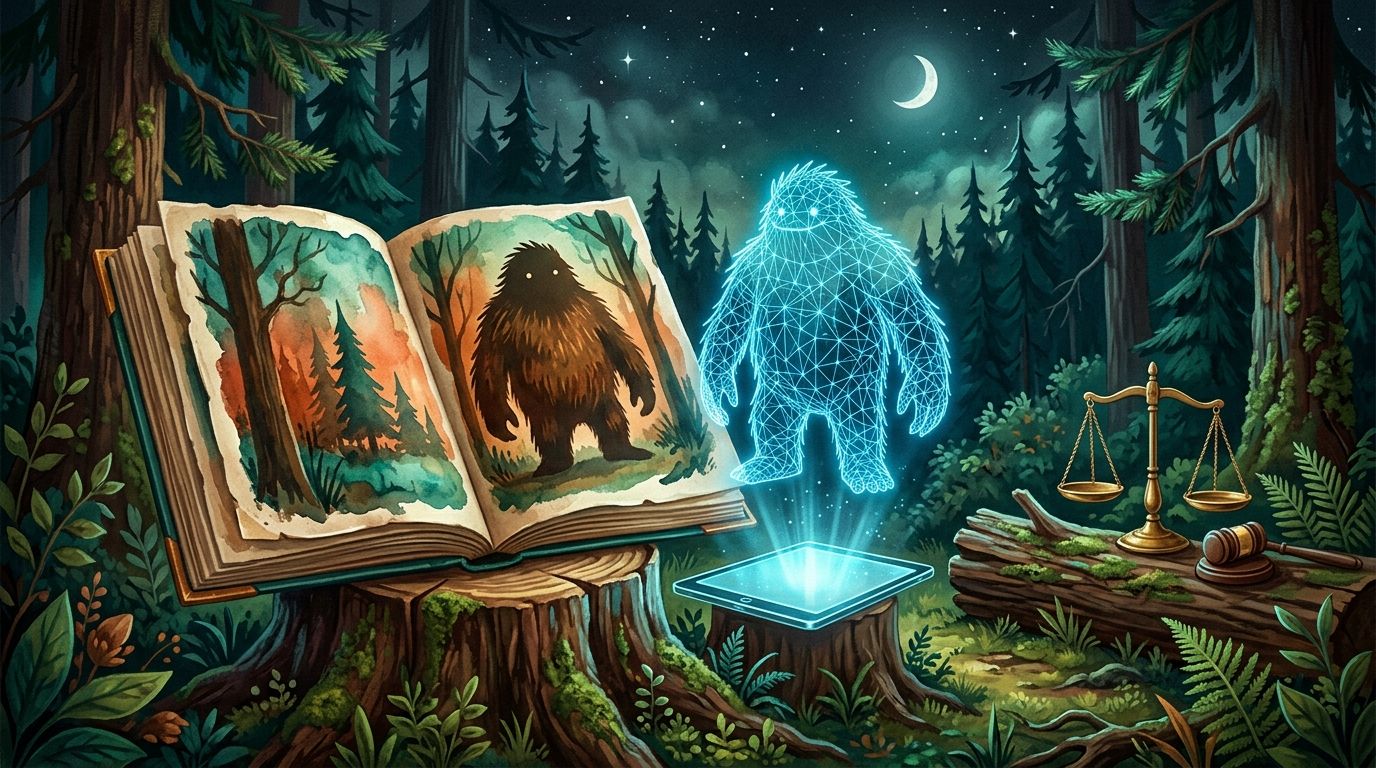
What did Axel Scheffler say? The illustrator of The Gruffalo says he is thinking about taking AI companies to court over chatbot images that copy his best-known character. "I am considering taking legal action," Scheffler told the German weekly Die Zeit in an interview published on Saturday, October 17, 2026. "Ideally, I'd like to team up with other artists and take legal action together." The German news agency dpa reported the interview in English the same day.
No case has been filed. According to dpa, Scheffler is in talks with his publishers about possible support. Germany's public broadcaster Deutschlandfunk reported that he told the paper he now needs legal advice.
What set it off
Die Zeit asked OpenAI's ChatGPT for a picture of a "Gruffalo" and showed Scheffler the results. In dpa's account, the chatbot produced images within minutes that bore striking similarities to his work.
"I'm appalled - that's quite clearly my character, only the backgrounds look completely different to how I draw them," Scheffler said, in dpa's English translation.
Scheffler draws by hand, using traditional methods. He drew the Gruffalo for Julia Donaldson's picture book of the same name.
The tech site heise online followed up on Sunday. It noted that Scheffler would rather join forces with other artists than sue alone, and that, according to Die Zeit, OpenAI's formal reply in an existing German case argues that a language model does not store data the way a database does and is trained to pick up patterns rather than repeat content word for word.
He would not be the first
Two German children's publishers are already suing OpenAI over this kind of output. Both cases are before the Munich Regional Court.
Der kleine Drache Kokosnuss. Penguin Random House Verlagsgruppe, the German arm of the group, sued OpenAI Ireland Ltd. on March 27, 2026, on behalf of author and illustrator Ingo Siegner and his publisher, cbj. The complaint says ChatGPT reproduces Siegner's Little Dragon Coconut books "in a recognizable form" even from simple prompts, and draws the dragon so that it closely resembles the original. The publisher also says ChatGPT offers, unprompted, to build a print-ready manuscript with an infringing cover and blurbs, along with instructions for uploading it to self-publishing platforms. Part of the suit asks for safeguards so that human authors' names are not put on content that is mostly AI-generated. OpenAI had not answered the publisher's cease-and-desist letter by its deadline, according to the release.
"We are fundamentally open to the opportunities of AI, but protecting intellectual property is our top priority," said Carina Mathern, the group's children's and young adult publisher.
Das NEINhorn. On August 19, 2026, Carlsen Verlag, backed by the German Bonnier group, filed its own suit together with author Marc-Uwe Kling and illustrator Astrid Henn. Carlsen says ChatGPT turns out NEINhorn stories and pictures that are hard to tell apart from the originals. It also says the chatbot offers whole print templates, complete with a cover, a copyright page, a fake ISBN and the Carlsen logo. The imprint page it generated even credited Kling for text, Henn for illustrations and Carlsen for copyright. The publisher wants OpenAI to stop the unlicensed use, disclose what happened and pay damages.
Kling put it bluntly: anyone who illegally downloads a single film, book or audiobook faces a stiff penalty, "but OpenAI simply steals all the art and culture of the whole world and thinks it can get away with it?"
dpa adds that the German Publishers and Booksellers Association backs the Penguin Random House case. On that case, dpa says OpenAI stated that it was investigating the allegations, and quotes the company: "We respect the rights of creators and content owners, and are having productive conversations with many publishers around the world so that they can also benefit from the opportunities of this technology."
Why it matters for authors and illustrators
Much of the AI copyright fight in the United States, from the Anthropic settlement to the authors' cases against OpenAI in New York, has turned on how books were gathered and used to train models. The German picture-book cases put more weight on what comes out of the chatbot: a character, a drawing style, or a ready-to-upload book that looks like the real thing.
That matters well beyond children's publishing. Both German complaints say ChatGPT was ready to package look-alike books for sale, and the Penguin Random House suit says it pointed users to self-publishing platforms. For indie authors, that is the same knockoff problem that already turns up in online stores, now with a chatbot doing the layout.
Picture books are especially exposed. The story and the art carry equal weight, and, as Die Zeit's test showed, a well-known character can be reproduced within minutes. Scheffler's idea of a joint action by artists would also put illustrators themselves, not only their publishers, at the front of the fight.
For now, he is still weighing it. He has not said which companies he would sue, where, or when.
Sources
- dpa via Yahoo News, October 17, 2026: "'Gruffalo' illustrator intends legal action over AI-generated images"
- Deutschlandfunk, October 17, 2026: "Grüffelo"-Illustrator Scheffler zeigt sich "entsetzt" über KI-Konzerne
- heise online, October 18, 2026: KI-Kopien des Grüffelo
- Bertelsmann, April 1, 2026: Penguin Random House Verlagsgruppe Files Lawsuit Against OpenAI
- Carlsen Verlag press release, August 19, 2026 (PDF): NEINhorn vs. OpenAI
The original interview ran in Die Zeit on October 17, 2026. Quotes from it here come from dpa's English report.