The Publishing Times
All the News That’s Fit to Publish
Industry Analysis · Guides
The Paper Trail of Progress: Print-First AI Self-Publishing on Amazon KDP
Print-first AI self-publishing on Amazon KDP is transforming the indie landscape, shifting the focus from digital screens to physical bookshelves.
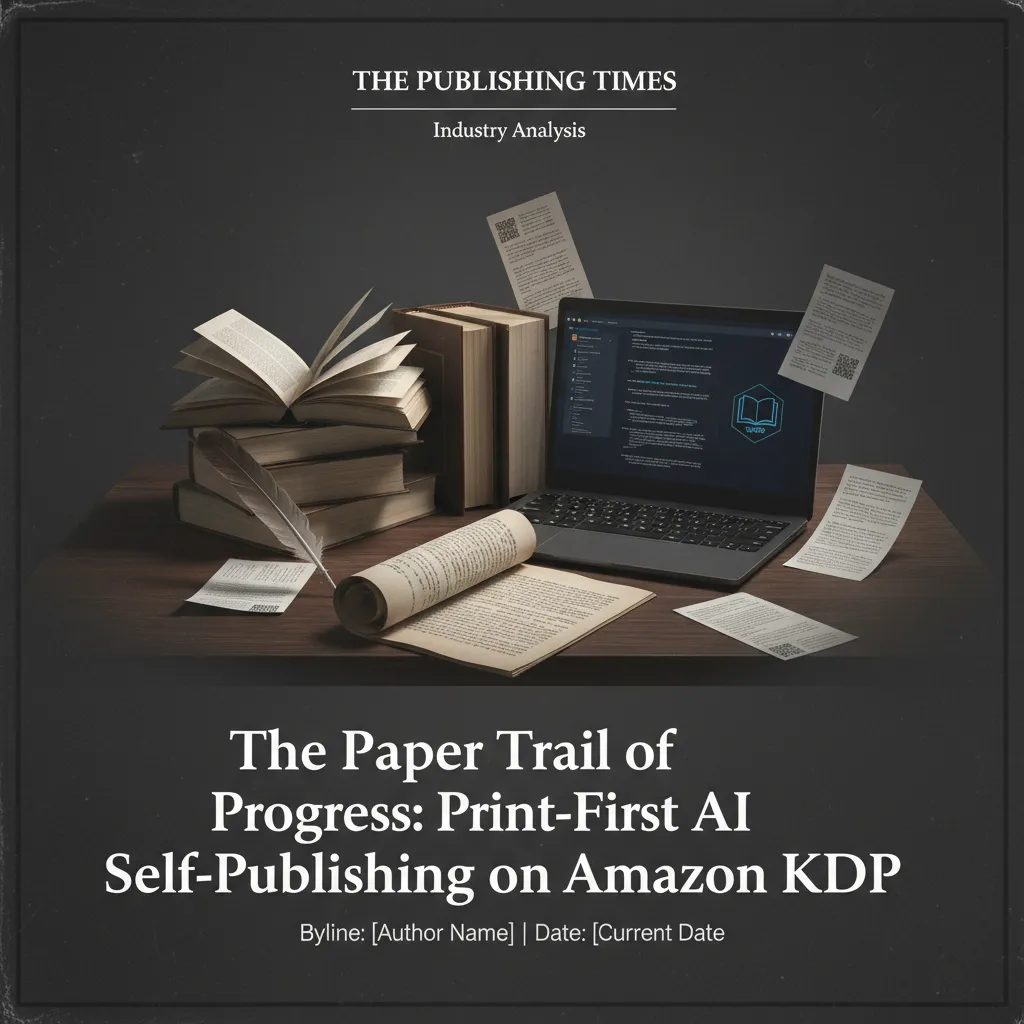
For years, the digital gold rush dominated the self-publishing conversation. Authors chased algorithms, optimized e-book metadata, and treated physical books as an afterthought—a mere courtesy print-on-demand file for the occasional purist. But the tide has turned. Today, print-first AI self-publishing on Amazon KDP is redrawing the battle lines of the modern book trade, proving that the future of automated publishing smells distinctly of fresh printer's ink.
Legacy gatekeepers spent the last two years hyperventilating over artificial intelligence, convinced that platforms like Amazon would soon drown in a digital slush pile of unreadable e-books. They missed the plot entirely. The smartest independent operators are bypassing the digital-first bottleneck, using advanced language models to generate, polish, and format comprehensive manuscripts specifically engineered for physical distribution. Print-first AI self-publishing on Amazon KDP means authors are moving straight to paperback and hardcover, leveraging high-end interior layout tools and AI-generated cover art that rivals traditional Big Five houses.
The Physical Pivot: Why Paper Wins the Algorithm
Digital fatigue is real. Readers scrolling through endless smartphone libraries crave tactile experiences, and print-first AI self-publishing on Amazon KDP capitalizes directly on this sensory rebellion. When an automated workflow produces a robust, 300-page non-fiction guide or a genre fiction omnibus, launching it as a physical artifact commands immediate authority. An e-book can be clicked away in a second; a physical book sits on a coffee table, demanding attention and conferring instant legitimacy upon its creator.
Furthermore, Amazon's print-on-demand infrastructure favors momentum. By focusing initial marketing efforts on physical sales rankings—which carry heavier algorithmic weight than fleeting e-book downloads—indie publishers are cracking bestseller lists with unprecedented speed. Tools like Kindle Direct Publishing setup guides are no longer just for hobbyists; they are the command centers for a new class of micro-publishers who treat print margins as their primary revenue engine.
Quality Control in the Age of Automated Ink
Of course, critics will point to the obvious hazard: quality control. When generating content becomes frictionless, the market risks saturation. Yet, the cream invariably rises because discerning readers are merciless judges. Successful print-first AI self-publishing on Amazon KDP relies on human curation at the finishing stage. AI provides the heavy lifting—structuring arguments, drafting indices, and typesetting complex layouts—but the human author remains the indispensable editor-in-chief, ensuring every physical copy meets a rigorous standard.
The future of publishing does not belong to those who fear the machine, but to those who master it to put real books into real hands.
We are witnessing the democratization of the physical book. The traditional publishing apparatus, bloated by overhead and glacial distribution schedules, is being outmaneuvered by agile creators utilizing print-first AI self-publishing on Amazon KDP.
Stop waiting for permission from an agent in Midtown Manhattan or a legacy editor working out of a London townhouse. Audit your workflow, embrace the physical medium, and let the machinery of modern publishing work for you. Check your KDP dashboard today and get your next title onto the printing press where it belongs.