The Publishing Times
All the News That’s Fit to Publish
publishing-news · Guides
Route 66 at 100: Why a Retired Highway Still Pulls Readers and Travelers
Route 66 turns 100 on November 11. It was decommissioned in 1985, yet books and essays about it keep coming. A three-part essay series looks at the psychology behind its pull.
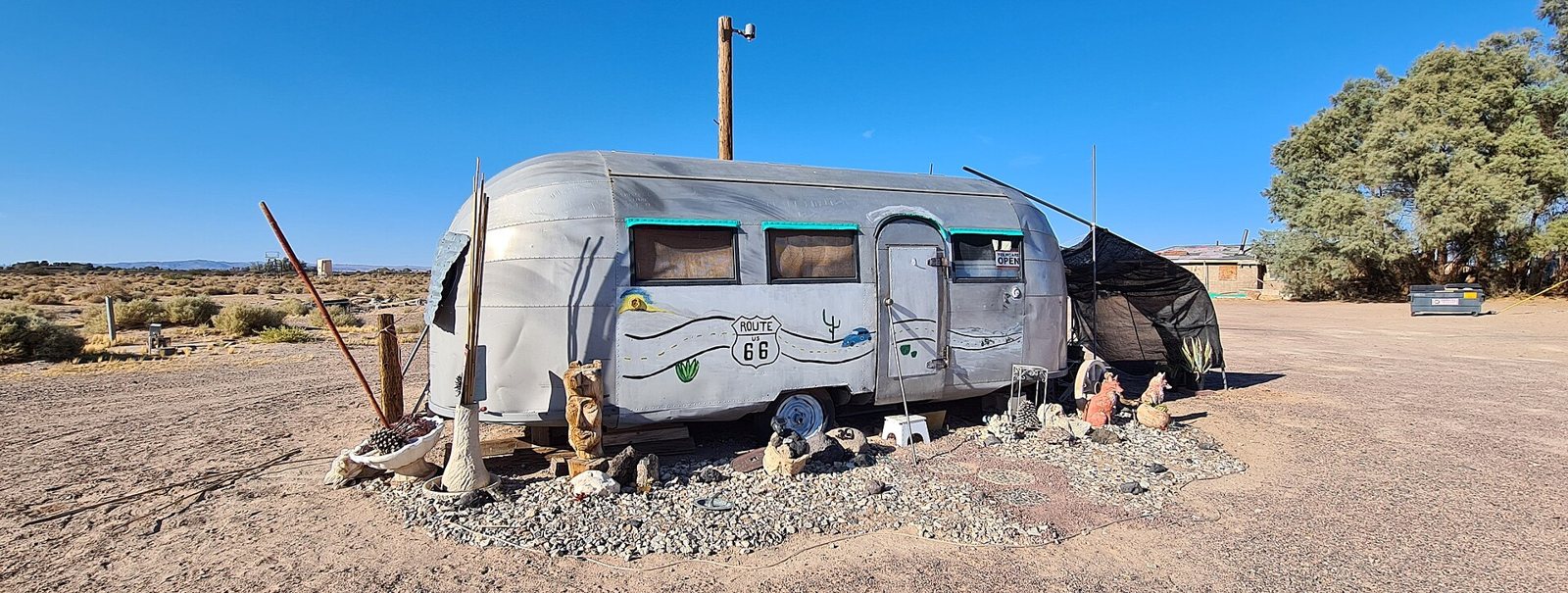
On November 11, U.S. Highway 66 turns 100. It's an odd birthday to celebrate. The road was formally decommissioned in 1985, and for most of the trip between Chicago and Santa Monica you can get where you're going faster on something else. Even so, the centennial has brought a steady stream of new books, essays, guidebooks and translations, and more seem to arrive every week as the date gets closer.
For anyone who writes or publishes, the obvious question is why. Why does a highway that no longer does its job still sell?
A road that outlived its own retirement
The basic facts are well documented. Route 66 was designated on November 11, 1926, as one of the original routes in the new federal highway system. It ran 2,448 miles, according to a 2018 House report on the centennial legislation. The National Park Service describes it as a stitching together of existing local, state and national roads, sold from the start as the shortest and most scenic way west.
Then came the interstates. The Federal Aid Highway Act of 1956 paid for the new system, and Interstate 40 was laid out to replace most of the road's western half. The Park Service's history of the road's decline and revival marks the end point. The last original stretch was bypassed when I-40 went around Williams, Arizona, in October 1984, and the highway was decommissioned the next year.
By any normal logic, that should have been the end. Instead, the same House report found that the road's popularity and "mythical stature" had grown at home and abroad since 1985. Congress went on to create the Route 66 Centennial Commission in Public Law 116-256, signed December 23, 2020.
The psychology of the pull
One of the more searching attempts to explain that pull is a three-part essay series by C. V. Wooster, published on cvwooster.com ahead of the centennial.
Part 1, "Why Route 66 and the Mojave Captivate the World," opens at the Bagdad Cafe in Newberry Springs, California, where tour buses still drop off visitors from Europe and Japan even though the kitchen has been closed since the pandemic. The essay argues that nostalgia alone is too small an explanation. It leans instead on research into awe. In a 2015 study led by Paul Piff, people who spent one minute looking up into a grove of tall eucalyptus trees then helped a stranger pick up more dropped pens than people who spent that minute looking at a tall building. In a 2017 study by Yang Bai and colleagues, tourists at Yosemite drew themselves smaller than tourists at Fisherman's Wharf in San Francisco. Researchers call this the "small self." The essay's case is that the empty desert along the old road produces the same feeling, and that travelers are coming back for it.
Part 2, "The Demarcation Line," treats the road as a line in time. It uses Federal Highway Administration registration figures, which show about 25.8 million cars in the United States at the end of World War II and 89.2 million by 1970, to show how quickly the country outgrew a road that ran through towns rather than around them. Air conditioning, power steering and the interstate all arrive in that stretch, and the old highway ends up on the far side of it.
Part 3, "The Mother Road," takes its title from John Steinbeck, who called 66 "the mother road, the road of flight" in The Grapes of Wrath. It reads the road through attachment theory, and in particular Mary Ainsworth's idea of a "secure base," the steady presence that makes exploring feel safe. On a highway with a gas station, a lunch counter or a motel every few miles, the essay argues, travelers could head into frightening country without ever being fully cut loose.
The series doesn't claim the research was ever about highways, and it says so. What it offers is a way to see why a road can feel more like a relative than a piece of infrastructure.
A year of events
The Route 66 Centennial Commission has been running a calendar of certified events and projects through 2026, organized by state from Illinois to California. It includes road trips, preservation grants, a centennial passport, a speaker series and oral-history projects. Most of it leads up to the November 11 anniversary, and the commission's calendar is the best single place to see what's happening near you.
For publishers and authors, the practical lesson is about timing as much as subject. Interest in Route 66 has been growing for 40 years without any help from the road itself. A centennial gives that interest a date, and readers tend to show up when there's a date to show up for.
Also out this season
C. V. Wooster's Mojave history Mrs. Orcutt's Driveway, which Part 2 of the series draws on, is now available in French and Spanish editions as well as English.
Disclosure: The Publishing Times and C. V. Wooster share an owner.
Photo: The Bagdad Cafe on old Route 66 in Newberry Springs, California, by Guallendra, CC0, via Wikimedia Commons.
