The Publishing Times
All the News That’s Fit to Publish
obituaries · Guides
Péter Nádas, Author of A Book of Memories, Dies at 83
Péter Nádas, the Hungarian novelist whose A Book of Memories Susan Sontag called the greatest novel of our time, died on August 26 at his home in Gombosszeg. He was 83.
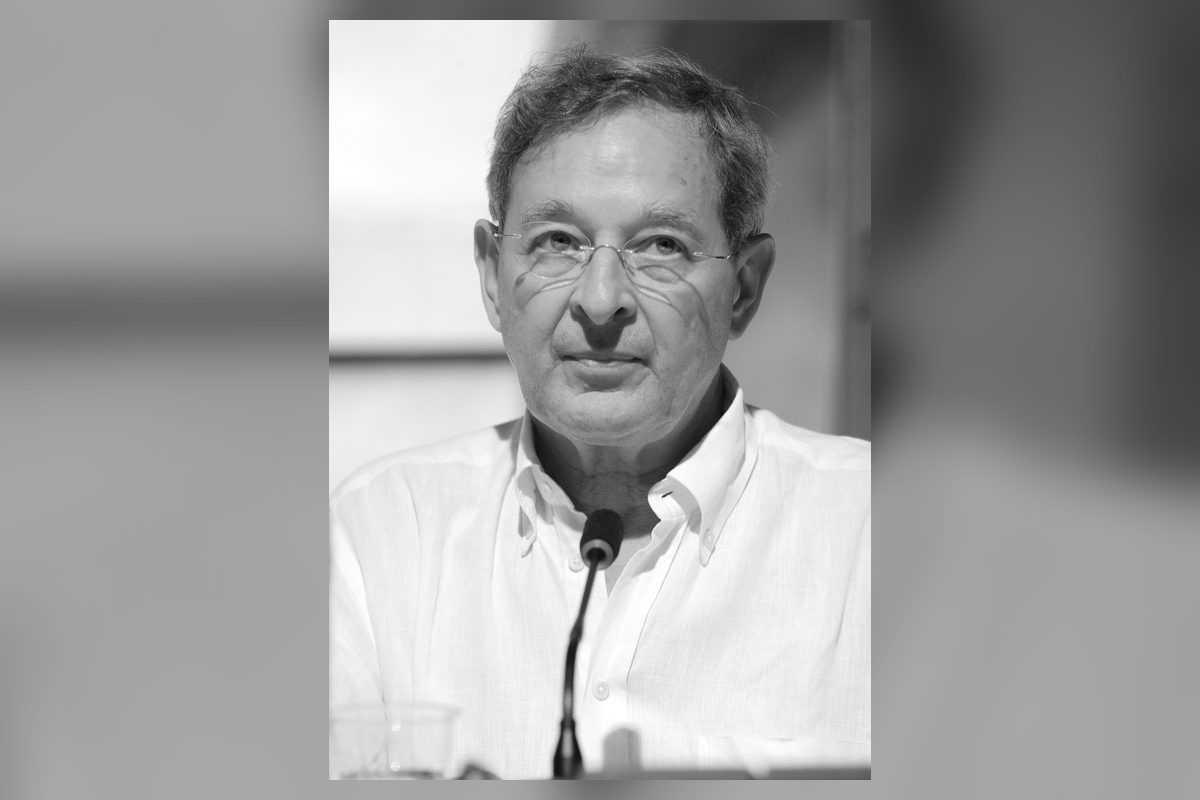
Péter Nádas, the Hungarian novelist whose two vast books became events in translation and whose name sat for years on Nobel shortlists that never called it, died early on Wednesday, August 26, 2026, at his home in Gombosszeg, in western Hungary. He was 83. His publicist, Anett Orosz, told Agence France-Presse. A post on his Facebook page said the same. The Guardian published its obituary on September 9.
He had put the job in one sentence, which the Guardian quoted: "I'm not a historian. I'm not an anthropologist, nor am I a sociologist. I work with the fates of individuals." Those individuals filled novels that English-language publishers issued years after they appeared in Hungarian, and that reviewers then treated as European events.
Two novels, and the time it took to translate a life
A Book of Memories was published in 1986 and in English in 1997. Susan Sontag, an early champion, called it "the greatest novel written in our time, and one of the great books of the century." AFP noted that Nádas spent more than a decade writing it, and that the prose drew comparisons to Proust. Parallel Stories, published in 2005 and in English in 2011, took 18 years and runs to about 1,200 pages. Nádas once said its structure was best described as "chaos," and added, "I cannot write any better than this." William T. Vollmann wrote that his method was "to spiral outward from erotic activity into memory and history." Tibor Fischer, in the Guardian, dismissed Parallel Stories as a pile of "disjointed vignettes." The split was the publishing argument: a book that some editors would have cut, and that others treated as the point.
The prizes that travelled with the translations were mostly from German-speaking Europe: the Leipzig Book Fair prize, the Austrian State Prize for European Literature, and, in 2003, the Franz Kafka Prize. In 2006 he was elected to the Academy of Arts in Berlin. He was named for years as a Nobel contender. The Guardian noted that the 2025 prize went instead to his younger compatriot László Krasznahorkai.
He published other books that publishers used as doors into the larger ones. Own Death (2002) recounts a heart attack in which he was pronounced clinically dead and then resuscitated, alongside photographs of a pear tree. He told Hungarian public television that dying had been "such a peaceful state, such a tranquility, which I had never experienced before," and that he feared any "translation of the experience would be a distortion." Shimmering Details, a two-volume memoir, appeared in 2017, with an English translation in 2023. A novel, Horror Stories, came in 2022. His last book, My Dead Friends, a fictionalised memoir of fellow writers including Péter Esterházy and Miklós Mészöly, appeared in 2025. He called it "an old man's joke."
A writer who stayed in the village
Nádas was born in Budapest on October 14, 1942, into a secular Jewish communist family. He lived through the siege of the city. His mother, Klára Tauber, died of cancer in 1955, when he was 12. His father, László Nádas, a senior party official who had been falsely accused of embezzlement and later exonerated, killed himself in 1958. As a teenager Nádas saw the Soviet crushing of the 1956 revolution. He worked as a photojournalist, published the short-story book The Bible in 1967, and left Budapest for the Danube village of Kisoroszi after the Soviet occupation of Prague in 1968. Censors held his novel The End of a Family Story until 1977. The secret police offered him easier travel if he would inform. He refused.
He and his partner, Magda Salamon, moved in the 1980s to Gombosszeg, where they stayed until his death. They married in 1990. "I live modestly, and have no desire to do otherwise," he said. He is survived by Magda and his brother, Pál.
Last year he told the Hungarian site Litera, in words AFP quoted: "Literature is a personal, not a communal matter, not a national one, but if no one cultivates it, then the population will certainly become stupid." For the houses that commissioned the English translations, the practical version of that sentence was a pair of books that took years to edit, years to print, and a readership willing to stay with a volume of more than a thousand pages. That readership was never huge. It was steady enough that both novels stayed in the conversation, and in print, long after the first reviews.
Image: Péter Nádas at Festivaletteratura, Mantua, September 6, 2012. Photo by Niccolò Caranti, via Wikimedia Commons, licensed CC BY-SA 3.0. Placed on a blurred extension of the same photo.

Sources
- Agence France-Presse, via France 24: Reclusive Hungarian author Peter Nadas dies aged 83 (August 26, 2026)
- The Guardian: Péter Nádas obituary (September 9, 2026)