The Publishing Times
All the News That’s Fit to Publish
author-resources · Guides
How to Prove You Wrote Your Book: Keeping a Record of Human Authorship
Publishers, retailers and the Copyright Office are asking about AI use. Writing tools are adding process logs. How to keep a record that shows how your book was written.
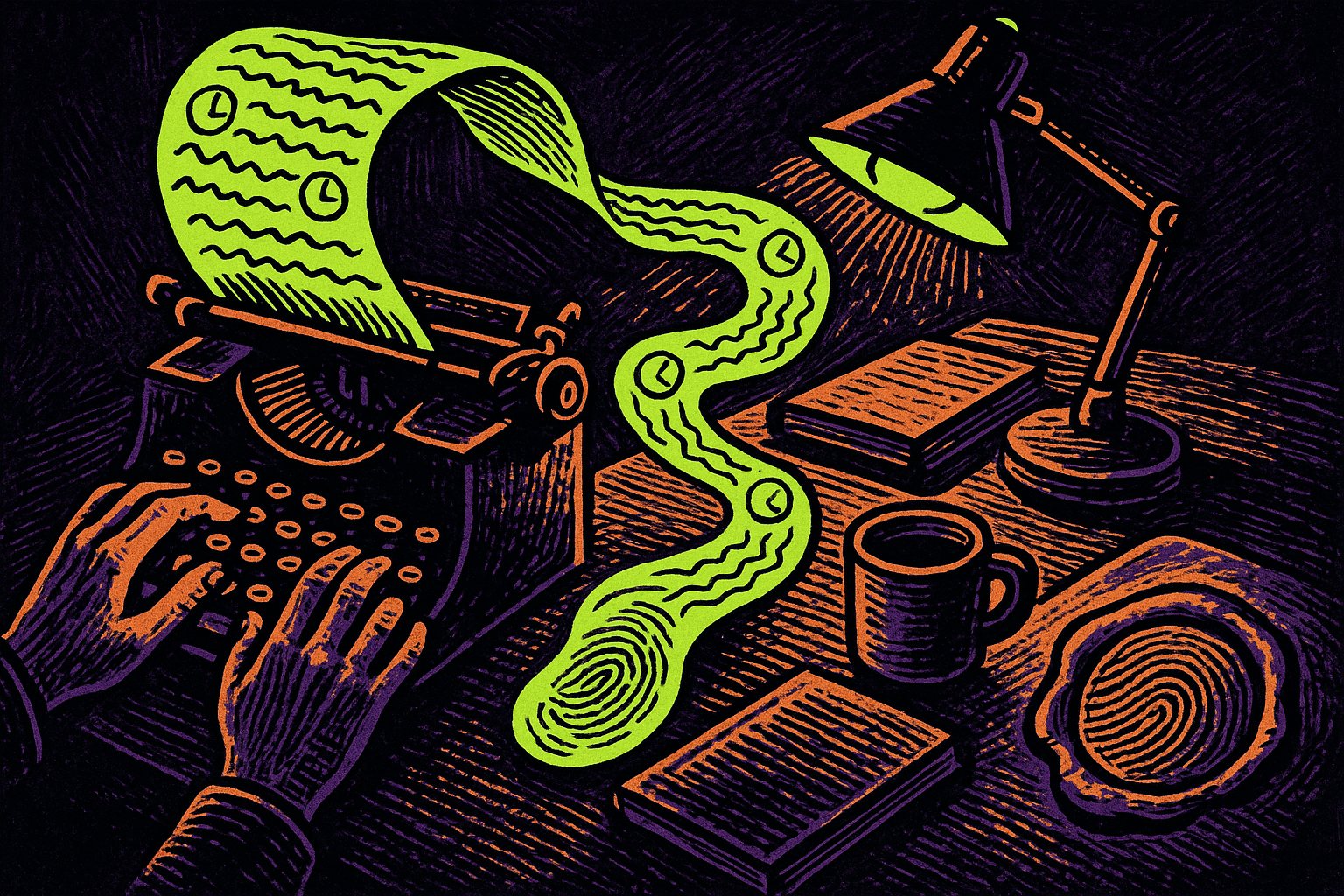
How can an author prove a book was written by a human? No single certificate settles it. The best evidence is a record made while you worked: dated drafts, version history and notes that show the book taking shape. As more parts of publishing ask about AI use, writing software is starting to build that record for you.
Who is asking
- Amazon KDP requires you to disclose AI-generated text, images or translations when you publish or republish, but not AI-assisted work such as editing help or brainstorming. The definitions are in the KDP content guidelines.
- The U.S. Copyright Office protects only human authorship. Its registration guidance asks applicants to disclose AI-generated material that is more than minimal. Its AI hub collects the rest of its reports.
- Publishers are asking too. In a survey published September 10, Oxford University Press found that only 30 percent of academic book authors had been asked to confirm whether they used AI. Among authors who had published a book in the last year, 54 percent said they did not use AI and 8 percent said they had fully disclosed their use. The OUP report and its summary also found that 74 percent of respondents weren't sure what they were supposed to disclose, and only 36 percent kept records of their AI use.
The OUP survey covered academic researchers, not novelists, but the same problem shows up for all authors: disclosure rules are arriving faster than good habits.
Tools that keep the record
- Deckle's Chronicle. On September 21, Deckle released version 1.7 with a feature called Chronicle, which "keeps a record of how your book was written." It logs writing sessions in the background, maps them to dates, and the company says the data never leaves your computer.
- Google Docs version history. Every Google Doc keeps a timeline of changes. Google's help page shows how to view and name versions. Naming one at each milestone (first draft, revision, copyedit) makes the timeline easy to follow.
- Scrivener snapshots. Scrivener can save dated copies of individual documents before you revise them. Literature & Latte explains how in its guide to snapshots.
A simple habit that works anywhere
- Save a dated copy of the manuscript at each stage and keep the old ones.
- Keep your notes, outlines and research with the drafts.
- Keep correspondence with editors and beta readers. It shows the book changing over time.
- If you use AI for anything, write down what and when, so any disclosure you make is accurate and complete.
What it does NOT mean
A process log does not prove you didn't use AI, and none of these tools claims to. It is evidence to show if someone asks. What matters most is being honest in your disclosure. KDP's rules separate generated content from assisted content, and knowing which one you used is up to you.
Desk takeaway
Start keeping the record now, before anyone asks for it. It costs nothing, and dated drafts are much easier to trust than a statement written after the fact.
Sources
- KDP Help: Content guidelines (AI content)
- U.S. Copyright Office: Registration guidance for works containing AI-generated material
- Oxford University Press: Disclosing AI use in academic research
- Deckle: Deckle 1.7
- Google Docs Help: Version history