The Publishing Times
All the News That’s Fit to Publish
Industry Analysis · Guides
Frankfurter Buchmesse 2026: The Robot in the Recording Booth
At this year's Frankfurter Buchmesse, AI narration dominated the discourse. But while tech giants push synthetic voices, readers still demand soul.
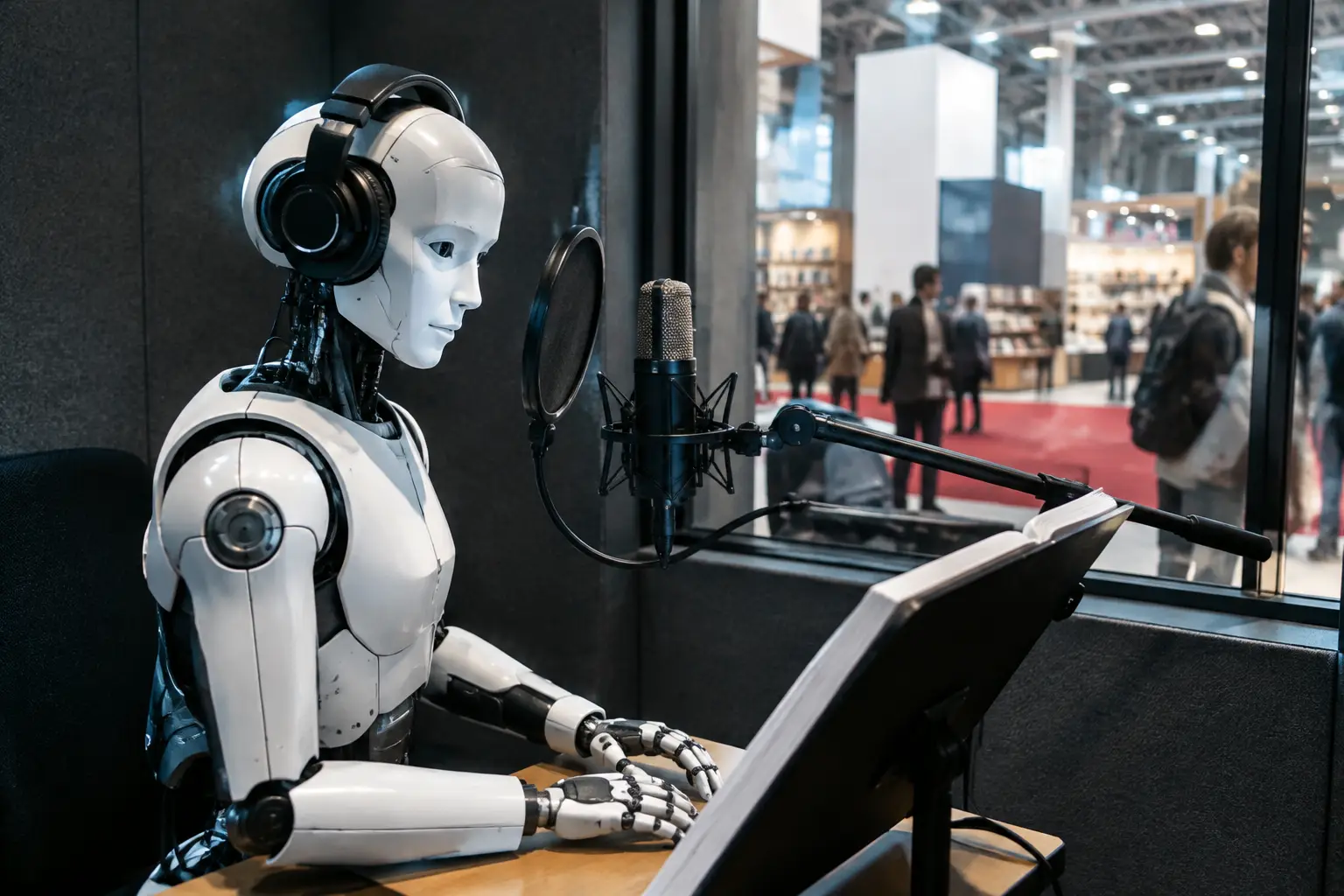
The Ghost in the Machine at Frankfurt
Walk the sprawling halls of the Frankfurter Buchmesse 2026 this week, and you will hear the future whispering back at you. It does not sound like a seasoned British narrator gripping a pint of bitter in a Soho studio. It sounds smoother, sharper, and utterly devoid of breath. AI narration has graduated from Silicon Valley PowerPoint decks to the bleeding edge of the global book trade, turning what was once a fringe experiment into the industry's most contentious talking point.
Fresh data released in Frankfurt by Audible suggests that half of surveyed consumers are willing to give synthetic audio a go. Yet, let us be entirely clear about what is happening here. Publishers are not rushing into AI narration because readers are storming the barricades demanding machine-read memoirs. They are doing it because the profit margins on human voice actors are squeezing corporate balance sheets until the pips squeak. The tech is improving at a terrifying pace, but convenience should never be mistaken for artistic progress.
The Compliance Trap and the Indie Advantage
Meanwhile, the legal landscape remains a bureaucratic circus. The European Union's much-touted AI Act has finally landed, giving traditional publishing houses theoretical leverage over how their copyrighted texts are scraped and processed. Yet, as many trade insiders noted over endless cups of mediocre Messe coffee, the regulation currently possesses plenty of bark and precious little bite. Compliance is turning into a game of corporate check-the-box, leaving smaller presses and independent authors to navigate a minefield of unlicensed training models.
This is precisely where the indie sector must hold its ground. While legacy houses bog themselves down in licensing committees and software trials, smart self-publishers are looking at AI narration with a cold, commercial eye. If you are running an ultra-niche non-fiction backlist that would otherwise never recoup studio recording costs, synthetic audio is a pragmatic tool. For a sweeping literary novel or a tense thriller, handing your prose over to an algorithm is absolute cultural vandalism. Readers know the difference, and they will vote with their wallets.
Reclaiming the Human Voice
We must stop treating audiobooks as mere containers for text and start respecting them as performances in their own right. A brilliant narrator brings subtext, irony, and emotional architecture to a manuscript that a string of binary code simply cannot parse. For those looking to master the modern audio market without losing their artistic integrity, check out Audiobook Production for Independent Authors to understand where human talent still reigns supreme.
Do not let the tech evangelists convince you that human narration is an obsolete luxury. Voice actors are co-creators of the literary experience, not line items to be optimized away for an extra percentage point of EBITDA. Reject the cheap synthetic shortcut, invest in real talent, and keep the human spirit firmly at the center of the publishing enterprise.