The Publishing Times
All the News That’s Fit to Publish
publishing-news · Guides
Christine Wunnicke Receives the 2026 Georg Büchner Prize in Darmstadt
The Munich-born novelist took Germany's most important literary prize, worth 50,000 euros, at a ceremony in Darmstadt on October 24. Her secret, she said: cutting.
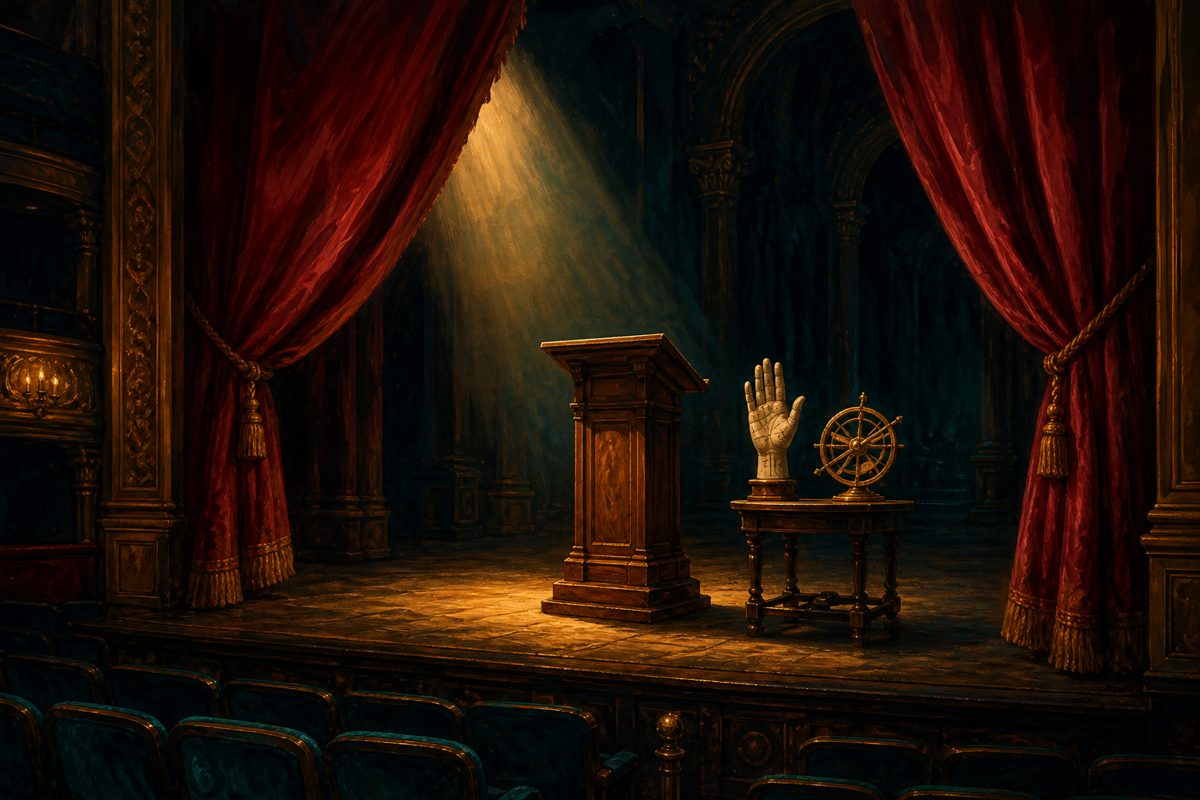
Christine Wunnicke was handed the 2026 Georg Büchner Prize on October 24 at the Staatstheater in Darmstadt. The award, worth 50,000 euros, is given by the Deutsche Akademie für Sprache und Dichtung and is widely regarded as the most important literary honor in the German-speaking world. The academy first named Wunnicke as this year's winner in July.
Her acceptance speech was short on ceremony. What she likes doing most when she writes, and does best, is cutting, she told the audience, according to Deutschlandfunk's report on the ceremony. "I cut everything that isn't necessary," she said (our translation). "That's why my books eventually got so short."
The novelist Judith Schalansky gave the laudation. She called Wunnicke the creator of a "wundertolles, kreuzvergnügliches" body of storytelling, Deutschlandfunk reported. Roughly: wonderful, and a delight from end to end.
Who she is
Wunnicke was born in Munich in 1966 and studied linguistics, older German literature and psychology in Berlin and Glasgow, the academy says. She worked in research administration at the Max Planck Society before her first radio plays and features came out in the early 1990s. Her first novels were Fortescues Fabrik (1998) and Jetlag (2000).
Since then she has built a career on odd, real figures from the 17th to 19th centuries. Der Fuchs und Dr. Shimamura (2015) follows a Japanese neurologist who seems to have caught hysteria. Katie (2017) sets the physicist William Crookes beside the medium Florence Cook in 1870s London. Die Dame mit der bemalten Hand (2020) strands a mathematician and a Persian astrolabe maker on an island; it won the Wilhelm Raabe Literature Prize and was shortlisted for the German Book Prize. Her latest, Wachs (2025), grew out of the story of a 13-year-old girl in 18th-century France who wants to buy corpses so she can become an anatomist. It also made the German Book Prize shortlist.
What the jury said
In its citation, the jury praised an "always surprising and confidently conceived" body of work set in places as far apart as Hollywood, Nagasaki and Paris (our translation). It said her art "makes the fictional visible in the supposedly historical," opening a revealing view of European scientific and colonial history without losing empathy for her characters.
The rest of the afternoon
The academy's program for the ceremony lists two other prizes handed out the same day. Helmut Böttiger received the Johann Heinrich Merck Prize for literary criticism and essay, and Anke te Heesen received the Sigmund Freud Prize for scholarly prose.
The program had outgoing academy president Ingo Schulze opening the afternoon. A day earlier, on October 23, the academy elected the linguist Helmuth Feilke to succeed him.
Why it matters for writers
The Büchner has gone to Max Frisch, Ingeborg Bachmann and Heinrich Böll, and last year to Ursula Krechel. This year it went to a writer of short, strange, meticulously researched historical novels, and her advice from the stage was to cut. That's a useful reminder for anyone working in historical fiction: the research can run deep while the book stays lean.
Sources
- Deutsche Akademie für Sprache und Dichtung, July 2026: Georg-Büchner-Preis 2026
- Deutsche Akademie für Sprache und Dichtung: Verleihung der Akademie-Preise, October 24, 2026
- Deutschlandfunk, October 24, 2026: Georg-Büchner-Preis an Christine Wunnicke überreicht