The Publishing Times
All the News That’s Fit to Publish
publishing-news · Guides
Canada Adds a Permanent 5 Million a Year to the Book Fund
The 2026 federal budget sets 20 million Canadian dollars over four years for the book fund, then 5 million a year. ANEL welcomed the permanence. The net gain is smaller than 5 million.
Canada's 2026 federal budget, presented on 5 November, puts 20 million Canadian dollars over four years into the book fund, then 5 million each year after that. The money is for producing and distributing books by authors from the country, ActuaLitté reported on 8 November 2026. The Association nationale des éditeurs de livres, ANEL, welcomed the top-up. The part the association cares about is that the money does not expire.
The funding needed a plain number. In 2024 Ottawa had set 10 million over three years. That temporary sum ends in 2026-2027, ActuaLitté reported. The 2025 budget did not bring it back. The 5 November news blocks a lasting slide back to the smaller pot.
Five million on the press release, less in the year-to-year math
Patrimoine canadien, in a ministerial plan drawn up before the budget, had forecast 39,97 million for the fund in 2026-2027, then 36,67 million in 2027-2028, ActuaLitté reported. The drop lines up with the exceptional aid running out.
With the new money the total would come to 41,67 million in 2027-2028, about 1,7 million more than the year before, not a net rise of 5 million, ActuaLitté reported. The report is plain that this is arithmetic from the forecasts on hand. The final split still depends on the credits Parliament votes.
In a communique on 5 November, Karine Vachon of ANEL said: "Nous sommes soulagés de voir cet investissement renouvelé de manière permanente." ActuaLitté printed the line. She is directrice générale of the association. Houses are dealing with higher production costs, shaky export markets, and the upheaval around AI, she said in that note.
Far from what the publishers asked for
A May 2026 memo from the association asked for a permanent increase of 38,4 million dollars, and the 5 million on offer is barely 13% of that, ActuaLitté reported. ANEL says the program's regular funding had not had a lasting rise since 2001.
The larger sum was meant to lift advances and royalties, to pay for promotion, and to build audio, digital and accessible editions. ANEL and the Association of Canadian Publishers both argued for doubling the base budget. The memo also raised copyright in teaching, and pay for works used by AI.
The fund does two jobs, ActuaLitté reported. It helps houses publish and sell Canadian books, and it pays for collective projects run by professional groups. Direct support goes to publishers that are at least 75% controlled by Canadian interests, ActuaLitté reported, and they have to be viable and respect copyright.
A federal evaluation published in November 2024 counted between 251 and 268 publishers a year from 2018-2019 to 2022-2023, ActuaLitté reported. Those houses sold about 400 million dollars a year of books by Canadian authors, with more than 100 million of that in export.
Quebec sales, and a separate digital collection
In Québec, final sales of new books reached 727,7 million dollars in 2025, up 3,2%, according to the Institut de la statistique du Québec, ActuaLitté reported. Bookshop receipts were almost flat, at 469,6 million.
Ottawa also plans 32,2 million over four years for a free national digital collection of Canadian books, ActuaLitté reported. The collection is meant to open with at least 200 titles in 2027-2028 and later pass 2 000 works. The aim is as many as two million loans a year by 2031-2032. The credits would pay for licences, the lending platform, and promotion of it. That money is separate from the 20 million for the book fund, ActuaLitté reported.
So the headline 5 million a year is real, and it is permanent, which is what ANEL said it wanted most. The year-to-year increase ActuaLitté calculates is closer to 1,7 million, and the request on the table in May was 38,4 million.
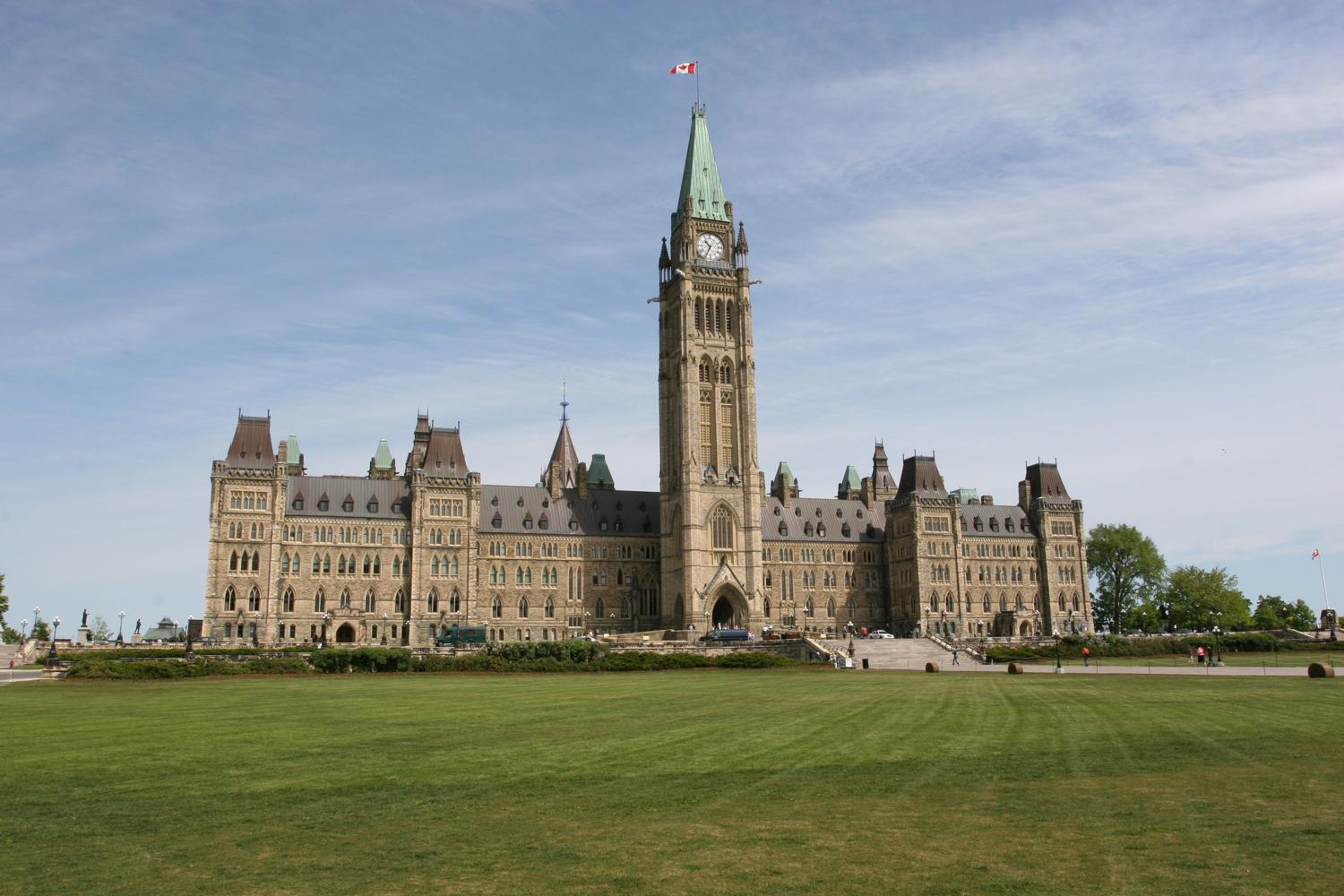
Photo: The Centre Block of the Parliament of Canada in Ottawa, 30 May 2008. Photo by Marc-Lautenbacher, via Wikimedia Commons, CC BY-SA 4.0.
