The Publishing Times
All the News That’s Fit to Publish
publishing-news · Guides
Authors Alliance Files Brief Urging Court to Reject 'Market Dilution' Theory in OpenAI Case
The nonprofit, which says it has over 3,500 members, argues that new AI-generated books that copy no protected expression are competition, not a harm copyright law recognizes.
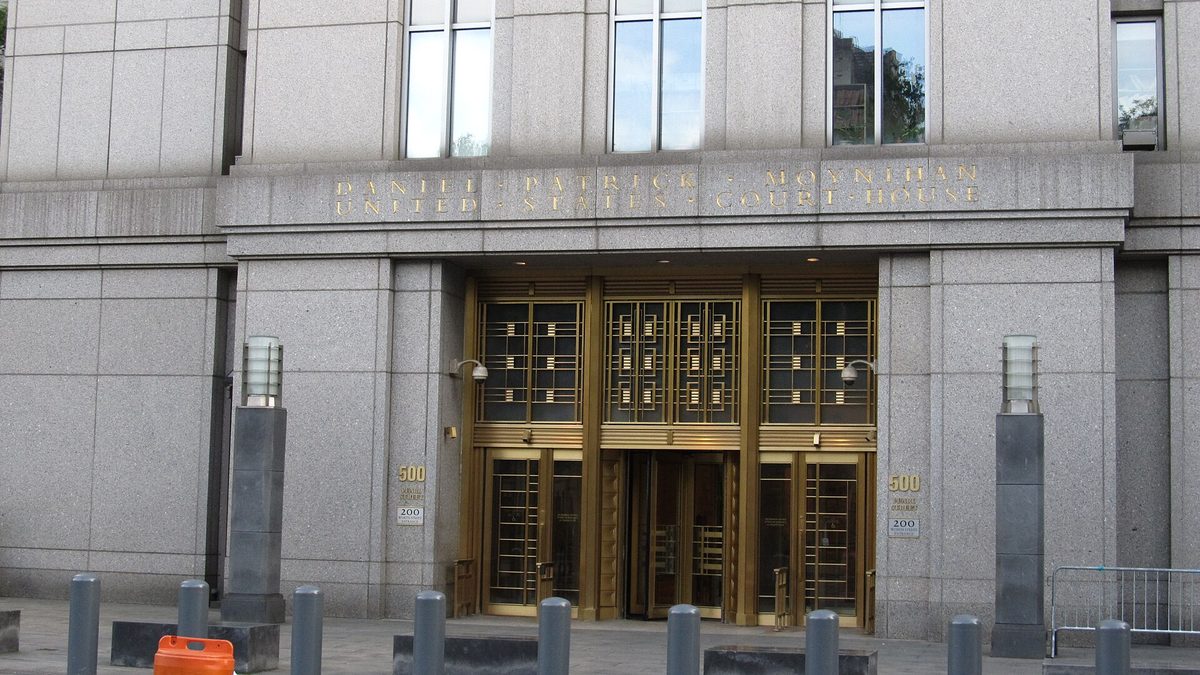
Authors Alliance, a nonprofit that says it has more than 3,500 author members, has asked the federal court in Manhattan for permission to file a brief supporting OpenAI and Microsoft on a single question in the consolidated AI copyright cases: whether "market dilution" counts as harm under copyright law. The group argues that it does not. Its proposed brief, dated October 29, was filed as Exhibit A to ECF No. 2328 in In re OpenAI, Inc. Copyright Infringement Litigation (S.D.N.Y., No. 1:25-md-03143).
The multidistrict case before Judge Sidney H. Stein combines suits by book authors, including the Authors Guild and a proposed author class, with suits by news organizations. The parties have filed cross-motions for summary judgment. In a post on October 30, the group said amicus briefs were due that day and that more were expected.
What "market dilution" means
The filing defines market dilution as the theory, first set out in the 2025 ruling in Kadrey v. Meta, that copying works to train an AI model weighs against fair use because the model can then produce new works that compete with the originals, "even if those works aren't themselves infringing." Authors Alliance notes that the author class has asked the court to adopt that view, arguing that AI training threatens "wholesale market displacement of human-authored books."
On everything else in the case, including how OpenAI got hold of its training data and whether any given output infringes, Authors Alliance says it takes no position.
The four arguments
The filing offers four reasons to reject the theory. First, it calls market dilution "just a fancy term for competition," arguing that the fourth fair-use factor covers uses that substitute for protected expression, not new works that compete for the same readers. Second, it says neither the defendants' burden of proof nor the scale of generative AI changes what kind of harm the statute recognizes. Third, it argues the theory would in effect protect ideas, facts and genres that copyright law leaves free for anyone to use. Fourth, it says the theory would hit hardest at authors who build on earlier work, such as scholars, critics and biographers.
On scale, the filing says: "Multiplying the number of noninfringing competitors does not change the nature of the injury; a thousand new romance novels that take nothing protectable from a plaintiff's book inflict no more cognizable harm than one does."
An author group on the defendants' side
Authors Alliance acknowledges that many of its members' books were used to train the models at issue. Its point is that authors are also users of copyrighted works, and that a rule meant to shield established authors from AI competition could also be used against new human-written work that relies on fair use. In its post, the group warns that large rightsholders with deep catalogs would be best placed to use such a rule, while individual authors and smaller publishers would bear the cost.
The filing follows a brief from author Kevin Kelly that also backed OpenAI's fair-use defense. The group's post says organizations and individuals on both sides of the case have already filed briefs. The Authors Alliance brief was signed by the group's counsel, whose admission to practice in the case is pending. Judge Stein has not yet ruled on the summary judgment motions.
Sources
- Authors Alliance, October 30, 2026: Authors Alliance files amicus brief in In re OpenAI Copyright Infringement Litigation
- Proposed brief of amicus curiae Authors Alliance (ECF No. 2328-1): In re OpenAI, Inc. Copyright Infringement Litigation
Photo: Entrance of the Daniel Patrick Moynihan U.S. Courthouse at 500 Pearl Street in Manhattan, where the Southern District of New York sits. Photo by Ken Lund, via Wikimedia Commons, licensed CC BY-SA 2.0.
