The Publishing Times
All the News That’s Fit to Publish
weekly-digest · Guides
The Week in Global Publishing, July 27, 2026: Anthropic Payouts, Simon Stream and Attacks on Books
Our recap of the international publishing news for the week of July 27, 2026: Bloomsbury's Anthropic settlement estimate, S&S's new imprint for indie authors, strikes on Ukrainian publishers and more.
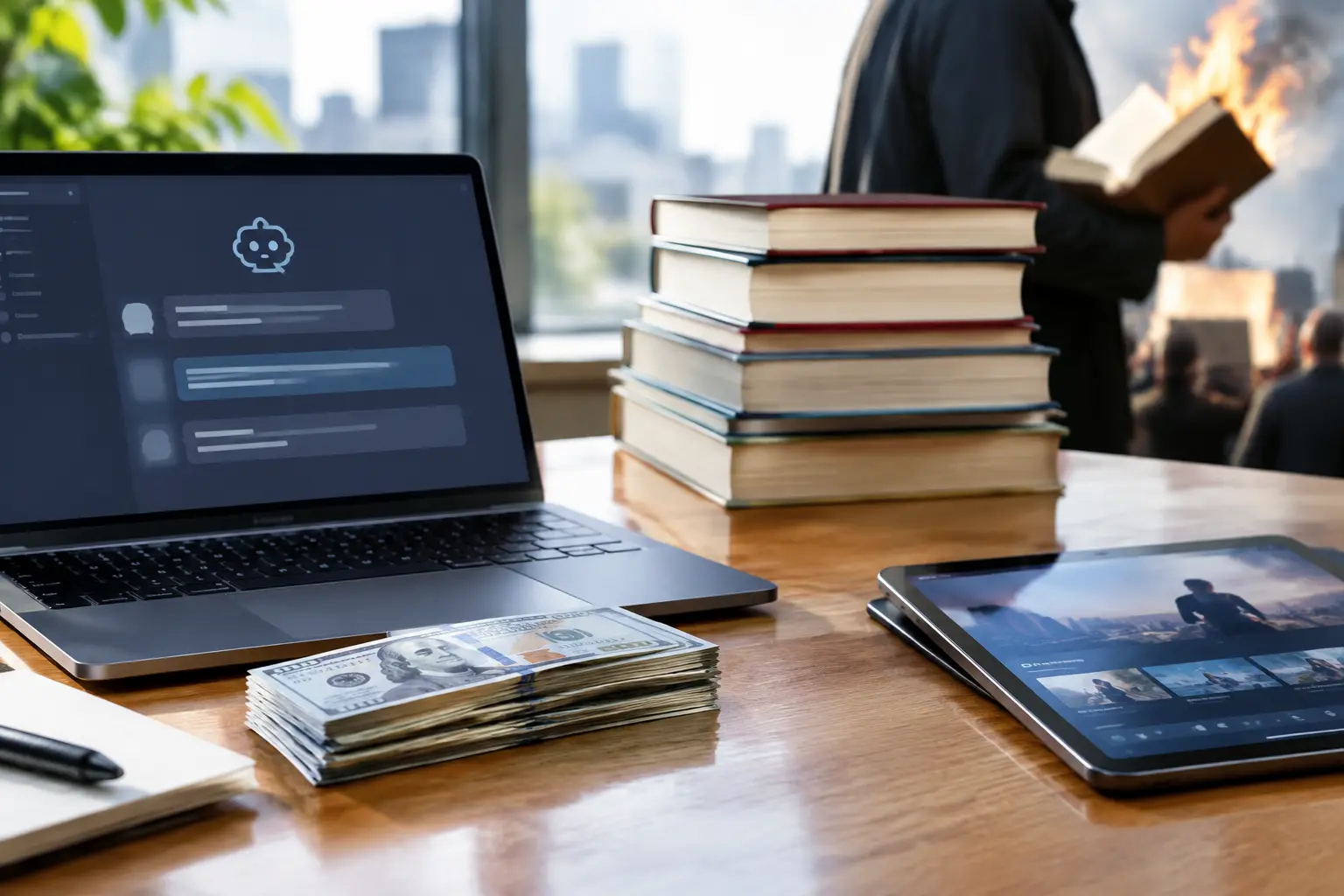
What happened in international publishing in the week of July 27, 2026? Money from the largest AI copyright settlement started to take shape, a Big Five publisher opened a new door for self-published authors, and the industry's physical infrastructure came under attack in two countries. Here is a summary, with sources. Publishing Perspectives ran a fuller roundup that week.
Bloomsbury puts a number on the Anthropic settlement
The $1.5 billion settlement between Anthropic and a class of US authors over the use of pirated books to train AI models received final court approval. Bloomsbury became the first major publisher to estimate its share publicly. It has 14,087 titles in the settlement. At roughly $3,000 per work, a figure that may rise depending on participation, the total due on its titles exceeds $42 million, split between the publisher and its authors. Publishers are in the class because the court treated them as beneficial owners of the copyrights alongside authors.
Authors whose books are on the settlement's works list are advised to check publisher communications and the claims process. Self-published authors who hold their own rights claim directly.
Simon & Schuster launches Simon Stream
S&S announced Simon Stream, a hybrid imprint aimed at authors with self-publishing success. It offers worldwide English-language publishing in all formats, digital royalties of 50 percent of net receipts, and an open submissions portal. Victoria Pepe leads it as publishing director. Early acquisitions include a five-book crime series from Jack Gatland, the pen name of Tony Lee. A 50 percent digital rate is well above the standard 25 percent of net that traditional contracts usually offer, which makes the imprint notable for independent authors.
Russian strikes hit Ukrainian publishers again
A missile and drone attack on Kyiv destroyed a warehouse belonging to the publisher #knygolove, the offices of the new house Mison, and damaged Arc.ua's offices and the Konvi printing plant. More than 850,000 books were reported destroyed or damaged, and Konvi warned of disruption to school textbooks. No staff were hurt. It followed a July 2 strike that damaged a Kyiv printing house and destroyed about 800,000 books.
Solidarity after attacks on a Dutch bookshop
The European and International Booksellers Federation, the International Publishers Association and the Federation of European Publishers condemned two attacks on Fugitive Books in Groningen, the Netherlands, which involved physical and verbal abuse linked to the shop's curation.
Also this week
- Safal Kiswahili Prize: Salim Hussein Ng'anzi and Ali Hilal Ali won the prize for writing in Kiswahili, announced July 24 in Dar es Salaam.
- Raising Readers: Hachette CEO David Shelley and more than 50 partner organizations launched a public service announcement on July 21 urging adults to read to children for at least ten minutes a day.
- Hong Kong Book Fair: the 36th fair closed on July 21. Voice of America reported that several publishers of political books were kept out or exhibited cautiously.
- Oslo: Prismatic Pages, an English-language bookstore in Norway, launched Prismatic Press, planning about one title a year for now.