The Publishing Times
All the News That’s Fit to Publish
publishing-news · Guides
Canadian Poet Anne Carson Wins the 2026 Nobel Prize in Literature
The Swedish Academy awarded the 2026 Nobel Prize in Literature to Canadian poet, essayist and translator Anne Carson for an oeuvre that creates "new forms for contemporary literature."
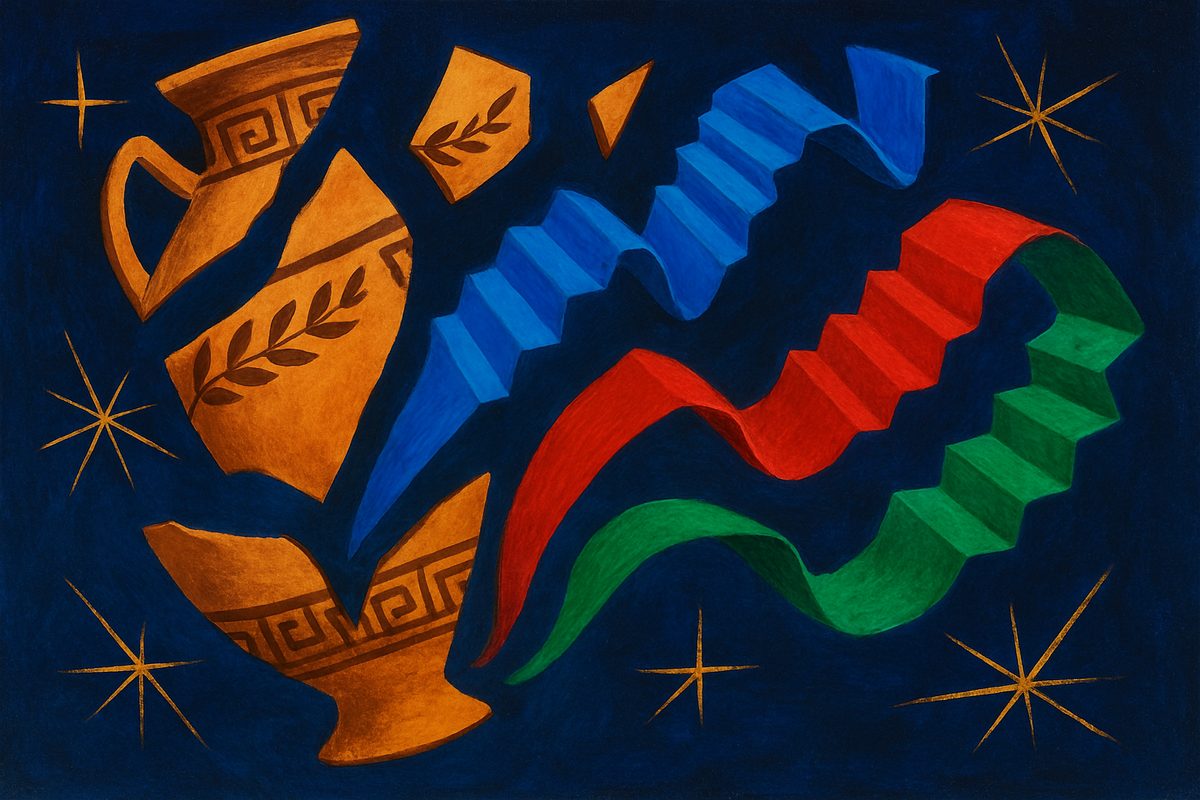
Can a poet who writes essays, novels in verse and translations of ancient Greek win literature's biggest prize? Yes. On October 8, 2026, the Swedish Academy awarded the Nobel Prize in Literature for 2026 to the Canadian author Anne Carson, "for her bold and inventive oeuvre that, in playful dialogue with the classical tradition, has created new forms for contemporary literature."
Carson receives the full prize. The Nobel Foundation says the prize money for 2026 is set at 12.0 million Swedish kronor per full Nobel Prize.
Who Anne Carson is
According to NobelPrize.org, Carson was born on June 21, 1950, in Toronto. She published her doctoral thesis in Classics, Odi et Amo Ergo Sum, in 1981, and throughout her career has combined writing poetry with translation and university teaching.
The Nobel Committee's biobibliography, written by its chair, Anders Olsson, says almost all her work "has centred upon the intersection between the philologist's obsession with words and the poet's desire for new meaning."
The last Canadian author to win the literature prize was Alice Munro, in 2013.
The books the committee singled out
The biobibliography walks through the works it considers central:
- Eros the Bittersweet (1986). A long essay that, the committee says, "lays the foundation for her subsequent authorship."
- "The Glass Essay," in Glass, Irony, and God (1995). A long poem that is also a story of grief and unrequited love, woven through with the work of Emily Brontë.
- Autobiography of Red: A Novel in Verse (1998). Described as "often heralded as Carson's greatest," it recasts the winged red monster Geryon from fragments by the Greek poet Stesichoros as a tender young hero in a modern coming-of-age story.
- The Beauty of the Husband: A Fictional Essay in 29 Tangos (2001).
- Nox (2010). Written in memory of her brother Michael, it takes the form of a box containing an accordion fold-out of pictures, letters and other texts.
- Float (2016) and Wrong Norma (2024). Float is twenty-two chapbooks that can be read in any order.
The committee also highlights her translations from Classical Greek, including Sappho's fragments in If Not, Winter (2002), Sophocles' Electra (2001) and Antigone (2015), and Euripides' Bakkhai (2015). It says these "may be regarded as independent works in their own right."
Her collaborations with visual artists, choreographers, and opera and theatre directors, the committee writes, "demonstrate the freedom with which she relates to literary expectations and rule systems."
Her publishers
The Nobel bibliography lists Carson's English-language books with Knopf, New Directions, Princeton University Press, Oxford University Press, New York Review Books, Faber and Faber, Oberon and Silver Press, among others. Her early book Short Talks was published in 1992 by Brick Books in London, Ontario.
The same bibliography lists translations of her work into Swedish, French and German.
Why it matters for authors
Genre lines are not a ceiling. The committee rewarded Carson precisely for moving between poetry, essay, fiction, translation and performance. If your book does not fit one shelf, that is not, by itself, a weakness.
Independent presses matter. Carson's Short Talks came from Brick Books, and the independent house New Directions published Nox and Wrong Norma. A Nobel career was built partly on small and independent publishers, not only on the biggest houses.
Translation is creative work. The Nobel Committee treats Carson's translations as "independent works in their own right." If you translate, that is a strong case for crediting translators prominently and negotiating terms that reflect their creative share.
Sources
- NobelPrize.org: The Nobel Prize in Literature 2026, press release (October 8, 2026)
- NobelPrize.org: Nobel Prize in Literature 2026, biobibliography
- NobelPrize.org: Anne Carson, facts
- NobelPrize.org: The Nobel Prize money
- NobelPrize.org: Alice Munro, facts (2013 laureate)