The Publishing Times
All the News That’s Fit to Publish
letters-from-the-desk · Guides
Is It Too Late to Start Writing at 55?
Writers ask this one all the time, usually with an apology attached. The answer is no, and the proof has names.
The question we keep hearing: Is it too late to start writing a book at 55?
It's one of the questions new writers ask most often, and it usually arrives with an apology, as if wanting this at 55 were a little embarrassing. It isn't. The short answer is no. The longer answer comes with names and dates.
Laura Ingalls Wilder had spent years writing a home column for the Missouri Ruralist, a farm paper, but she didn't begin the book that made her name until 1931, the year she turned 64. Harper & Brothers published Little House in the Big Woods in 1932, when she was 65. Seven more Little House books followed over the next eleven years. She had help, and it's worth saying so: her daughter, Rose Wilder Lane, was an experienced journalist who worked closely with her on the manuscripts. But the childhood on those pages was Wilder's own, and nobody else could have supplied it.
Raymond Chandler was a vice president at an oil company, earning $1,000 a month during the Depression, until he was fired in 1932 at 44 for drinking and neglecting his work. He decided to try the pulp magazines. His first story, "Blackmailers Don't Shoot," ran in Black Mask in December 1933 and paid $180. Things stayed lean for years; in 1938 his writing brought in $1,275. His first novel, The Big Sleep, came out in February 1939. He was 50.
Penelope Fitzgerald didn't start her literary career until 58, with a 1975 biography of the painter Edward Burne-Jones. Before that, according to the Booker Prize Foundation, she had taught at a string of schools and had known homelessness. She also lived for a time on a Thames houseboat that sank twice. Her first novel, The Golden Child, came out in 1977. She wrote it to amuse her husband, who was terminally ill. Two years later her third novel, Offshore, won the Booker Prize.
Harriet Doerr left Stanford in 1930 to get married. She spent the next four decades raising two children and living between Pasadena and Mexico, where her husband's family had mining interests. After he died in 1972, she decided to finish her degree, starting with a few classes at Scripps College and returning to Stanford in 1975. She took a writing course as a lark. Her classmates noticed that her stories kept returning to the same Mexican village and the same people, and told her to make them a novel. Publisher after publisher turned it down, often with a note that said, more or less, "We like it, but what is it?" Stones for Ibarra finally came out in 1984, when Doerr was 74, and won the American Book Award for first fiction. "I found I'm quite happy working on a sentence for an hour or more, searching for the right phrase, the right word," she said later. She compared the work to stonecutting.
Frank McCourt taught English in New York City high schools for decades. For years he tried to turn his childhood in Limerick into a novel and couldn't find the voice. After he retired, he tried telling it as himself. The memoir took him 13 months to write. Angela's Ashes was published in 1996, when he was 66, and won the Pulitzer Prize the following year.
Look at what each of them brought to the desk. Wilder had a frontier childhood that she remembered in detail. Chandler had studied the pulps and admired Dashiell Hammett's work in Black Mask. Doerr had decades of Mexico, and the patience to spend an hour on a sentence. McCourt had spent years telling stories to teenagers who did not want to be in his classroom. The years they spent not writing turned into the material they eventually wrote about.
None of this makes starting easy. Chandler's money troubles were real, and Doerr's manuscript was rejected again and again. At 55 you'll be a beginner next to people who started in college, and that can sting. Skill still grows with practice at any age.
So here's our advice. Pick a regular time, even a short one, and protect it. Write the thing only you can write: the job you held for thirty years, the town you left, the person you were at 20. Find two or three readers who will be honest with you. Expect rejection, and treat it as a normal part of the work, the way all five of these writers eventually had to.
And stop apologizing for the number. Wilder started her first book at 64. Doerr returned to Stanford at 65. Compared with them, 55 is early.
Have a question for Letters from the Desk? Send it to the editors. We answer questions that come up often, without names.
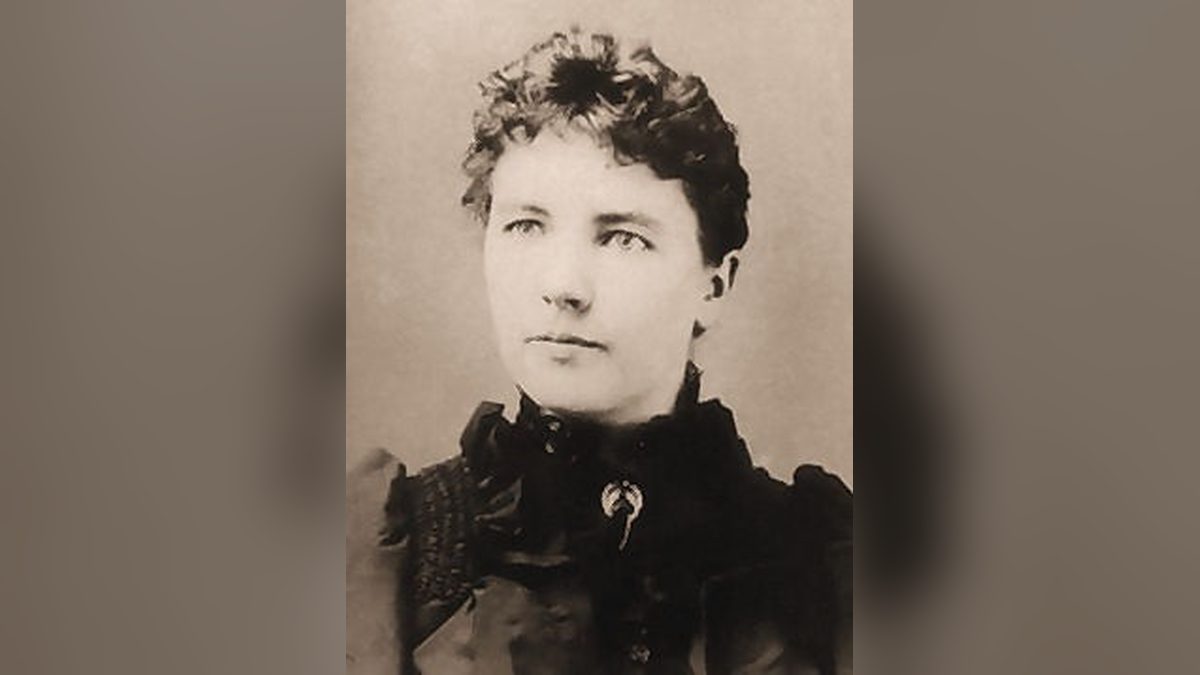
Image: Laura Ingalls Wilder around 1885, nearly fifty years before her first book was published. Photographer unknown. Public domain, via Wikimedia Commons.

Sources
- "Wilder, Laura Ingalls (1867–1957)," MNopedia, Minnesota Historical Society. https://www.mnhs.org/mnopedia/search/index/person/wilder-laura-ingalls-1867-1957 (born Feb. 7, 1867; 65 at publication; Missouri Ruralist home column, 1912; seven books over eleven years)
- "Laura Ingalls Wilder," Wisconsin Historical Society. https://legacy.wisconsinhistory.org/Records/Article/CS557 (did not begin her first book until 1931; daughter Rose's help)
- Library of Congress Name Authority File, "Wilder, Laura Ingalls, 1867-1957." https://id.loc.gov/authorities/names/n79095251.html (birth date)
- "Raymond Chandler Biography," Chicago Public Library. https://www.chipublib.org/raymond-chandler-biography/ (Dabney Oil, $1,000 a month, admired Hammett's Black Mask stories, fired in 1932 at 44, $180 for first story in Dec. 1933, $1,275 in 1938, The Big Sleep in Feb. 1939, born July 23, 1888)
- "Penelope Fitzgerald," The Booker Prizes. https://thebookerprizes.com/the-booker-library/authors/penelope-fitzgerald (career began at 58, Booker for Offshore, houseboat that sank twice, homelessness, teaching; Offshore the shortest winner)
- "Penelope Fitzgerald," Wikipedia. https://en.wikipedia.org/wiki/Penelope_Fitzgerald (1975 Burne-Jones biography, The Golden Child in 1977 written for her terminally ill husband, 1979 Booker)
- Myrna Oliver, "Novelist Published First of 3 Gem-Like Books at Age 74," Los Angeles Times, Nov. 26, 2002. https://www.latimes.com/archives/la-xpm-2002-nov-26-me-doerr26-story.html (Doerr's marriage, Mexico, return to Stanford, rejections, "We like it, but what is it?", American Book Award, the stonecutter quote)
- Carlo Gébler, "Frank McCourt" (obituary), The Guardian, July 20, 2009. https://www.theguardian.com/books/2009/jul/20/frank-mccourt-obituary (teaching career, failed attempts at a novel, 13 months to write, 1996 publication, 1997 Pulitzer)
- "Frank McCourt," Wikipedia. https://en.wikipedia.org/wiki/Frank_McCourt (born Aug. 19, 1930; 1997 Pulitzer Prize for Biography or Autobiography)