The Publishing Times
All the News That’s Fit to Publish
publishing-news · Guides
PEN America Counts 11,982 School Book Bans in 2025-26, a Record
PEN America recorded 11,982 school book bans in the 2025-2026 school year, its highest one-year count since it began tracking in 2021. Stephen King is again the most banned author.
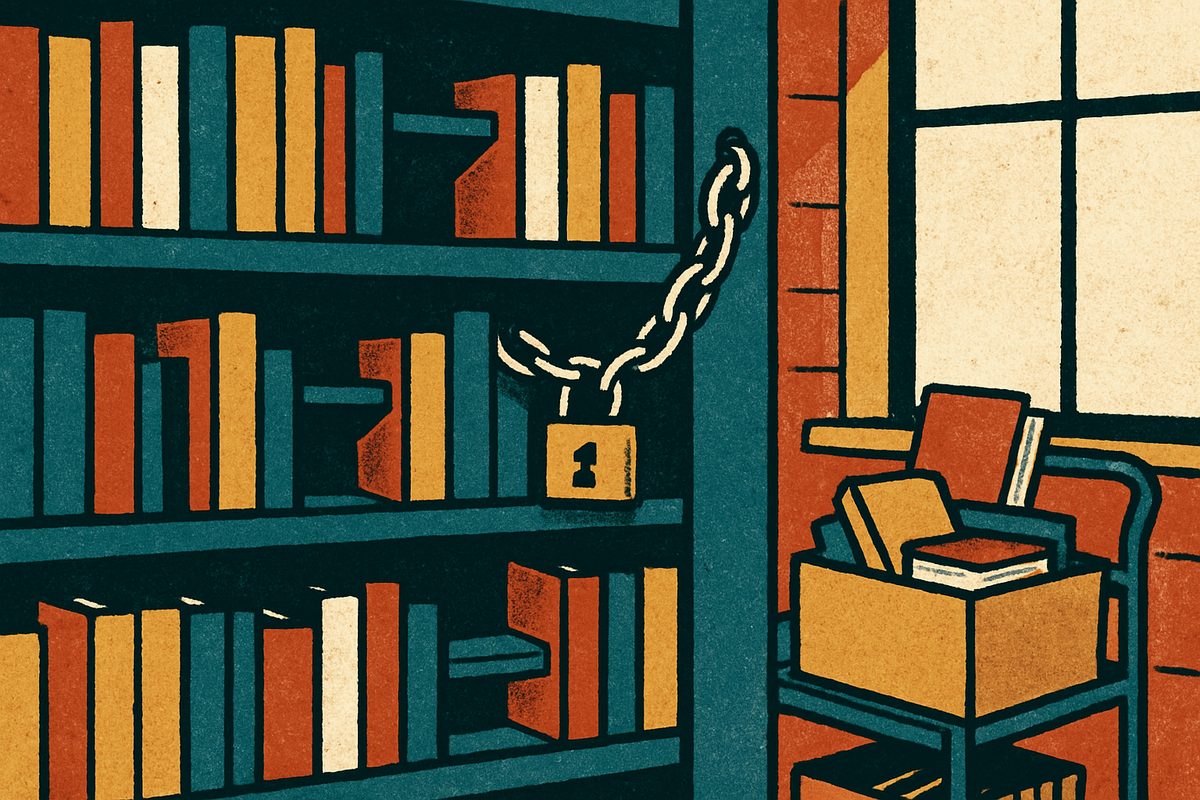
How many books were banned in U.S. public schools last school year? Nearly 12,000. On October 5, 2026, PEN America released A Spotlight on School Book Bans, which reports that 11,982 books were banned in public schools during the 2025-2026 school year, according to its Index of School Book Bans. PEN America says that figure is the highest number of recorded bans in a single year since it began tracking book bans in 2021.
The report also records a record 7,370 unique titles banned, affecting the work of more than 4,000 authors, illustrators, and translators. More than 4,500 of those titles had never appeared in the index before, which PEN America describes as the most new titles added in a single year. According to the report, 114 school districts banned books, also the highest number in a single school year. Since 2021, PEN America says, it has documented nearly 34,000 book bans in public schools.
Where the bans happened
According to the report, the vast majority of recorded bans came from two states, Texas and Florida. Texas had the most, at more than 8,000 by PEN America's analysis, and the report links that total to SB 13, a book law passed in 2025. Across all states, PEN America says bans in 72% of the districts it tracked can be attributed to state legislation, whether because district review policies cite state law, because books were removed by committees of the kind SB 13 mandates, or because a district's stated reason cited state legislation.
PEN America points out that Texas and Florida also have the most complete records, because the Texas Freedom to Read Project and the Florida Freedom to Read Project filed public records requests. It says its figures are an undercount in every state, and that they exclude quieter forms of censorship such as restricted book purchases or targeted weeding.
The report also describes political pressure that goes beyond legislation. In Florida, it says, a 2025 state Board of Education hearing concerning Hillsborough County Public Schools led to removals across the state: books on Hillsborough's list of 55 titles had been removed at least 40 times across 10 districts by July 2025, and at least 165 times across 18 districts by June 2026.
AI tools and manga
PEN America highlights two newer trends. First, it reports that district administrators are increasingly relying on AI to evaluate books for removal. Citing public records obtained by the Texas Freedom to Read Project, the report says generative AI chatbots repeatedly recommended removing books because other districts had banned them, not because the books met the legal standard for obscenity. It also says several Texas districts signed large contracts with Bookmarked, which it describes as a "book intelligence company."
Second, the report says manga and graphic novels were banned pervasively, often as entire series at once. It names Atsushi Ohkubo, Hajime Isayama, Rumiko Takahashi, and Yusei Matsui among the most frequently banned authors.
The most banned books and authors
PEN America's 2026 list of most banned books includes Patricia McCormick's Sold, Laurie Halse Anderson's Speak, Ellen Hopkins's Crank and Identical, Margaret Atwood's The Handmaid's Tale, John Green's Looking for Alaska, and Sarah J. Maas's Kingdom of Ash.
Its 2026 banned author list says Stephen King was the most banned author for the second consecutive year, with 312 instances of bans across 30 school districts, including It, Christine, and his craft book On Writing. Hopkins follows with 234 instances, Maas with 196, and Jodi Picoult with 116. Titles appearing in the index for the first time include Lessons in Chemistry by Bonnie Garmus, Jane Eyre by Charlotte Brontë, and Be More Chill by Ned Vizzini.
The ALA's Banned Books Week list
The report arrived on the second day of Banned Books Week, which runs October 4 to 10. Also on October 5, the American Library Association said its Office for Intellectual Freedom tracked 4,235 unique titles challenged in 2025, the second-highest total on record. To mark its 150th anniversary on October 6, the ALA released a list of the 150 most challenged books it documented from 1990 through 2025. The week concludes Saturday, October 10, with Let Freedom Read Day.
The two counts measure different things. PEN America's index tracks bans, meaning books removed or restricted in public schools. The ALA figure tracks challenges, meaning attempts to remove or restrict titles.
Why it matters for authors
Young adult fiction is heavily represented: the report says more than 90% of the YA titles banned were fiction.
The report also gives authors and publishers a new development to monitor: districts using AI tools and outside vendors to decide what is removed from the shelf. The ALA says libraries, bookstores, schools, and allied groups are holding local programs throughout Banned Books Week.
Sources
- PEN America: A Spotlight on School Book Bans (October 5, 2026)
- PEN America: Banned Books List 2026 (October 5, 2026)
- PEN America: Banned Author List 2026: Stephen King Most Banned Again (October 5, 2026)
- American Library Association: ALA marks 150th Anniversary during Banned Books Week with list of 150 Most Challenged Books (October 5, 2026)