The Publishing Times
All the News That’s Fit to Publish
publishing-news · Guides
Highsmith's American Publishers Remember Her, as a Film Opens
Otto Penzler told The Guardian he started Penzler Books for Patricia Highsmith, who by 1984 had no American publisher. Helen Mirren plays her in a new film.
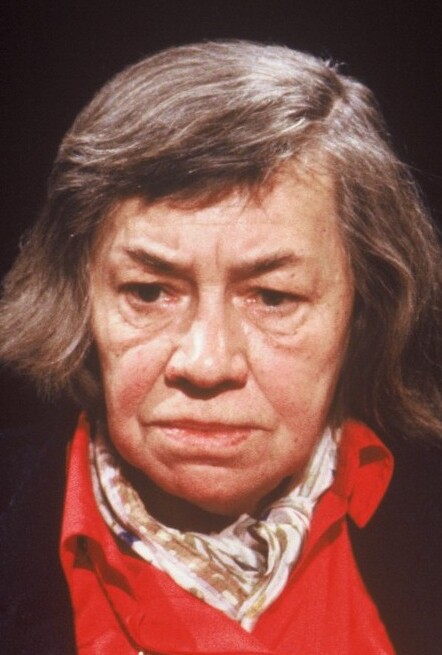
Otto Penzler told The Guardian he once signed Patricia Highsmith to a six-book deal and started an imprint so she would not be identified as a mystery writer. Melissa Denes's report, published on 15 November 2026, comes as Helen Mirren plays Highsmith in Anton Corbijn's film A Talent for Murder, adapted from Joanna Murray-Smith's 2014 play Switzerland. By 1995, the year in which the film is set, Highsmith had lived alone for years.
The deal, and the years without a US house
Penzler owns The Mysterious Bookshop. He told The Guardian he has loved Highsmith's work all his life. In 1984 she agreed to give a reading at his shop on West 56th Street. She was 63, and by then she had lived in Europe for 20 years. "But no one showed up. We had maybe four people," he said. She stonewalled his small talk about France with "I can't stand the bloody frogs."
The Guardian traces the publishing record behind that evening. Highsmith was born in Fort Worth, Texas, in 1921. Strangers on a Train, her 1950 debut, was a hit, helped by Alfred Hitchcock's film. The Price of Salt, later republished as Carol, sold a million copies under the name Claire Morgan. The Talented Mr Ripley, in 1955, was a critical success. Around the mid-1960s her American luck ran out. Her agent wrote that the books were too subtle, and the characters too unlikable, for paperback. By 1984 she had no American publisher.
"She never found a home because she was so unpleasant," Penzler told The Guardian. He had not known that when he signed the six-book deal and created an imprint. "Pat didn't want to be identified as a mystery writer, so I started Penzler Books." He knew her first editor, Joan Kahn. "When I told her I'd bought Pat, she said: 'God, what's wrong with you?' Later we agreed she was a monster."
The film's plot, The Guardian says, is fiction: a young American editor has to get a dying Highsmith to write one last Ripley novel. Penzler later took her to interviews, which were short and sometimes never ran. "The one time Pat said something positive was when I asked if she'd like to stop for a drink. She said, 'I would have a beer. I like beer.'" Her Swiss editor, Anna von Planta, remembered a first meeting in 1984 the same way. "Pat greeted me coolly, disregarding my extended hand. She then ordered a beer and fell silent."
Fisketjon, Calder, and the backlist
Gary Fisketjon, her next and last American editor, at Atlantic and then Knopf, died of a stroke on 7 November, aged 72. Denes had spoken to him a week earlier. He told The Guardian they never had a cross word. "We never had a cross word," he said. He published Found in the Street in 1987 and the last Ripley novel, Ripley Under Water, in 1991. He passed on her final novel, Small g: A Summer Idyll, because he felt he could not publish it as fervently as she deserved, and he said she took that better than he had feared. He had seen the film a couple of days before the interview. "Dame Mirren's expressions reminded me vividly of Pat, even if her personality was a lot darker than I ever saw."
Liz Calder looked after Highsmith at Bloomsbury from the late 1980s until the writer's death. A 1992 diary note mentions Calder's parrot. "Actually it was Juju," Calder told The Guardian, "but they communicated quite well." Calder, now 88, called her "very, very unusual" and "almost unsocialised," and said she loosened up over time.
By 1967 Highsmith had a lasting relationship with the Swiss publisher Diogenes, which took the literary estate when she died, along with 56 volumes of unpublished diaries, letters and stories. Those diaries, The Guardian says, laid bare antisemitism and racism. In a 2021 introduction to a published edition, von Planta writes that the views were kept even where offensive, except "in a handful of more extreme instances," where the editors felt a duty to deny her a stage, as they had while she was alive. Penzler told the paper that if there was antisemitism in the stories, he had probably missed it because it was mild next to the rest. A weak late novel, Found in the Street, sold 40,000 copies in Germany and 4,000 in America.
Highsmith died of lung cancer and anaemia on 4 February 1995, aged 74. In 1998 Robert Weil, then new at W. W. Norton, asked Diogenes about publishing a couple of the books. They insisted he take all 14 that were out of print in America, including Strangers on a Train. He was told, "This is folly, the sales don't bear up." He persisted, and later took Small g, the Ripleys, Carol, and dozens of unpublished stories. A 2001 collection of short stories got "thundering reviews" after Anthony Minghella's 1999 film of The Talented Mr Ripley had brought readers back. "What she could do in 12 pages was amazing," Weil told The Guardian. "Highsmith can write these stories where you feel stabbed at the end." Exile, the paper says, gave her clarity. "She learned to skin and savage America. She never left it psychologically."
Photo: Patricia Highsmith on the television programme After Dark, 18 June 1988. Photo by Open Media Ltd, via Wikimedia Commons, CC BY-SA 3.0.
