The Publishing Times
All the News That’s Fit to Publish
the-long-middle · Guides
Five Years of Rejection Slips: Octavia E. Butler's Long Middle
Before the MacArthur grant and the landing site on Mars, there were potato chips, dirty dishes and a 2 a.m. alarm.
In the early 1970s, Octavia Butler came home from a writing workshop in Pennsylvania having sold two short stories. She was in her early twenties, painfully shy, six feet tall, and fairly sure the hard part was behind her.
She wrote about that feeling years later, in her afterword to "Crossover," one of those first two stories. "I thought I was on my way as a writer," she said. "In fact, I had five more years of rejection slips and horrible little jobs ahead of me before I sold another word."
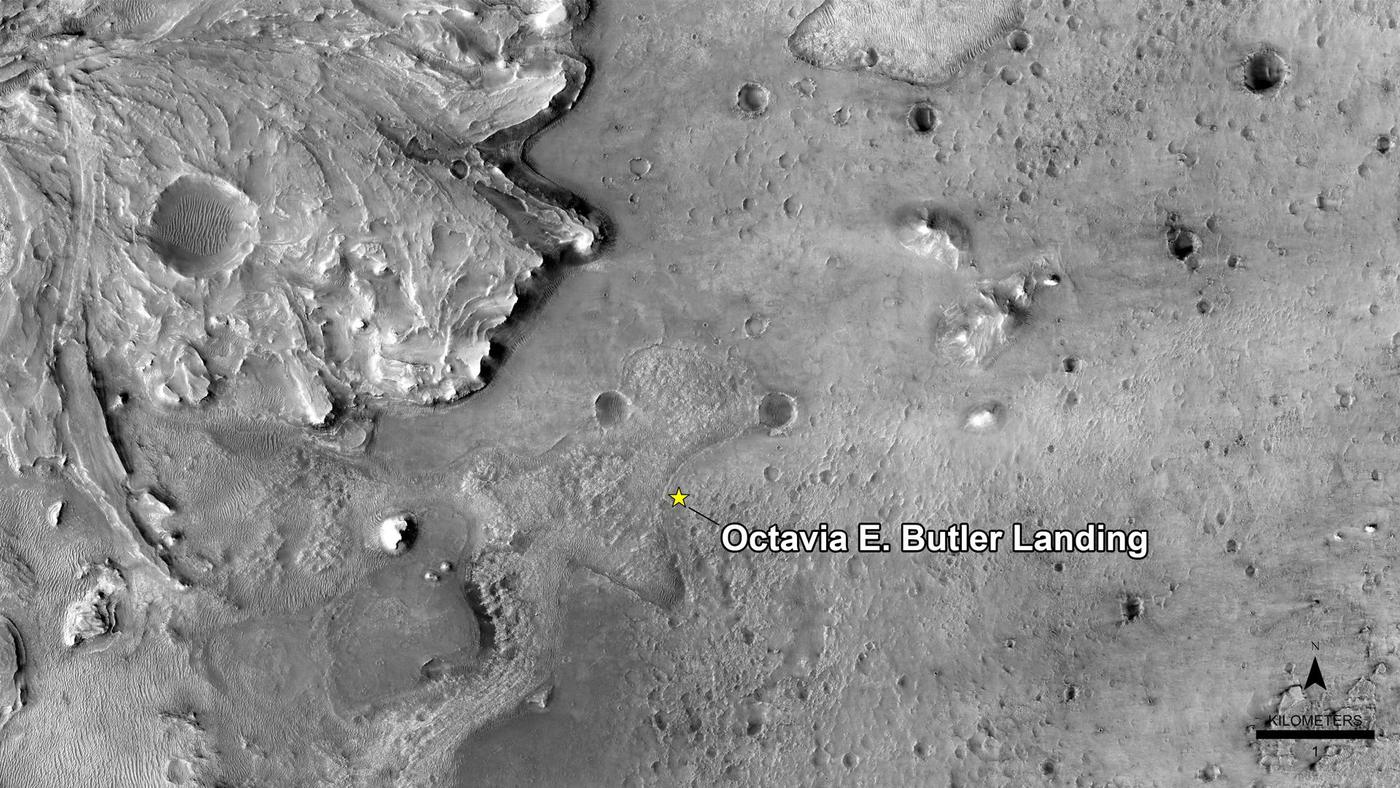
Most profiles of Butler hurry past that sentence on the way to the prizes: the Hugo and Nebula awards, the MacArthur Fellowship in 1995 (she was the first science fiction writer to receive one), the patch of Mars that NASA named for her in 2021. This column is about the five years she covered in one line.
A girl with a Remington
Butler was born in Pasadena, California, on June 22, 1947. Her father shined shoes and died when she was three. Her mother cleaned houses, and sometimes her daughter came along. "Sometimes I went to work with my mother, and I was very ashamed," Butler told the Los Angeles Times in 1998. "She went in back doors, and she cleaned up after other people."
Her mother also brought home whatever books her employers threw away. "I had books with yellow pages, books that had been scribbled on, spilled on, cut up, books without covers, anything that could be read," Butler said. Her mother bought her a Remington portable typewriter on the installment plan, at $10 a month.
When Butler was 13, she told her favorite aunt that she was going to write stories for a living. The aunt, a hospital nurse, shook her head. "Honey," she said, "Negroes can't be writers." Butler remembered thinking her aunt was probably right. She had never read a word that, as far as she knew, had been written by a Black author. She kept typing anyway.
After high school she worked during the day and took classes at Pasadena City College at night. As a freshman she won a campus short story contest. The prize was $15, her first money as a writer.
The workshop, and after
Her break came through the Open Door Program, a Screen Writers Guild workshop set up to find and mentor women and minority writers. Her teacher there was Harlan Ellison, already well known and famously blunt. He told her that her screenplays were awful. He also told her that the prose inside them was fabulous, and that she should be writing fiction. Ellison helped pay her way to the Clarion Science Fiction Writers' Workshop in Clarion, Pennsylvania. Her mother added money she had been saving for dental work.
At Clarion, Butler sold two stories. "Crossover" appeared in the workshop's 1971 anthology. "Childfinder" went to Ellison for an anthology that never came out in her lifetime.
Then, for five years, nothing sold.
Two to five in the morning
Butler lived alone in an apartment in a run-down part of Los Angeles. To make rent she inspected potato chips at a factory, washed dishes, swept floors and, finally, sold things over the phone. She liked to call that last job "telephone solicitation," because, she joked, "it sounds more salacious." She was good at it. The Times described her voice as an "elegant, hypnotic baritone" and wrote that she could persuade almost anyone to buy almost anything.
She chose undemanding work on purpose, because she wanted her mind fresh for the early hours. Every morning she got up around 2 and wrote until 5. Then she went to work. The rejection slips kept coming, and so did the pages.
Two weeks before Christmas 1974, the telemarketing company laid her off. "I cried, and if you cry about losing a job that awful, you know things are pretty bad," she told the Times. "I had to fish or cut bait."
What she did next is the part of the story worth remembering. She pulled out every story she had ever written, going all the way back to the flying-horse tales of her childhood, and spent the next few months piecing them into a novel. It became Patternmaster, the story of a future humanity ruled by a telepathic elite. An agent had once tricked her mother out of the equivalent of a month's rent, so Butler skipped agents and mailed the manuscript to publishers herself. Doubleday published it in 1976.
Even then, she didn't quit work right away. Mind of My Mind followed in 1977 and Survivor in 1978. Only in 1978 could she stop taking temporary jobs and live on her writing. Kindred, her novel about a Black woman from 1970s Los Angeles pulled back in time to a Maryland plantation, came out in 1979. It became her best-selling book.
The middle didn't end on schedule
Recognition came slowly too. "Speech Sounds" won the Hugo Award in 1984, and "Bloodchild" won the Hugo, Nebula and Locus awards. In 1995 the MacArthur Foundation gave her a fellowship worth $295,000.
When the Los Angeles Times profiled her in 1998, the paper noted that she was still not well known outside science fiction, and that even within it she had enjoyed more critical success than commercial. She bought her walking shoes once a year at Sears. Her one real luxury, a friend said, apart from the thousands of books she bought, was a weakness for long silver earrings.
Butler died on February 24, 2006, at 58. Her papers went to the Huntington Library in San Marino, next door to the city where she grew up. The honors kept coming after her death. FX premiered a television series based on Kindred in 2022, and NASA named the spot where the Perseverance rover touched down on Mars "Octavia E. Butler Landing."
It's tempting to read her life backward from those honors and see a straight line. She never described it that way. In her telling, the years after Clarion were rejection slips and horrible little jobs, and the only thing moving forward was the work she did between 2 and 5 in the morning.
Asked how she coped with the hard parts of life, she said she wrote about them. "The major tragedies in life, there's just no compensation," she told the Times. "But the minor ones you can always write about. It's my way of dealing, and it's a heck of a lot cheaper than psychiatrists. The story, you see, will get you through."
If you are somewhere in your own long middle right now, that last line is worth taping above the desk.
Image: "Welcome to Octavia E. Butler Landing" (PIA24483), the Perseverance rover landing site on Mars named for Butler, seen by the HiRISE camera on NASA's Mars Reconnaissance Orbiter. Credit: NASA/JPL-Caltech/University of Arizona. Source. Use does not imply NASA endorsement.
Sources
- Pamela Warrick, "An Alternative Universe," Los Angeles Times, Oct. 18, 1998. https://www.latimes.com/archives/la-xpm-1998-oct-18-tm-33581-story.html (childhood, the typewriter, the aunt's warning, Ellison, the jobs, 2 to 5 a.m., the 1974 layoff and quotes, mailing Patternmaster herself, Sears shoes, earrings, "The story, you see, will get you through.")
- "Octavia E. Butler," Wikipedia (citing Butler's afterword to "Crossover" in Bloodchild and Other Stories, and her essay "Positive Obsession"). https://en.wikipedia.org/wiki/Octavia_E._Butler (birth date, father's death, the $15 contest, the "five more years" quote, Clarion sales, the 1971 anthology, Patternmaster dates, stopping temp work in 1978, awards, MacArthur, death, Huntington papers, NASA landing site, FX series)
- Octavia E. Butler, afterword to "Crossover," in Bloodchild and Other Stories (Four Walls Eight Windows, 1995; Seven Stories Press, 2005). Original source of the "five more years of rejection slips" quote.
- "Octavia Estelle Butler," National Women's History Museum. https://www.womenshistory.org/education-resources/biographies/octavia-estelle-butler (2 a.m. writing, potato chip inspector, dishwasher, telemarketer; Doubleday published Patternmaster in 1976)
- Karen Grigsby Bates, "Octavia Butler: Writing Herself Into The Story," NPR, July 10, 2017. https://text.npr.org/535879364 ("lots of horrible little jobs")
- NASA/JPL-Caltech, "Welcome to Octavia E. Butler Landing" (PIA24483), March 5, 2021. https://photojournal.jpl.nasa.gov/catalog/PIA24483