The Publishing Times
All the News That’s Fit to Publish
obituaries · Guides
John Crowley, Author of Little, Big, Dies at 83
John Crowley, whose novel Little, Big won the World Fantasy Award and was called a neglected masterpiece by Harold Bloom, died on August 8 at his home in Conway, Massachusetts. He was 83.
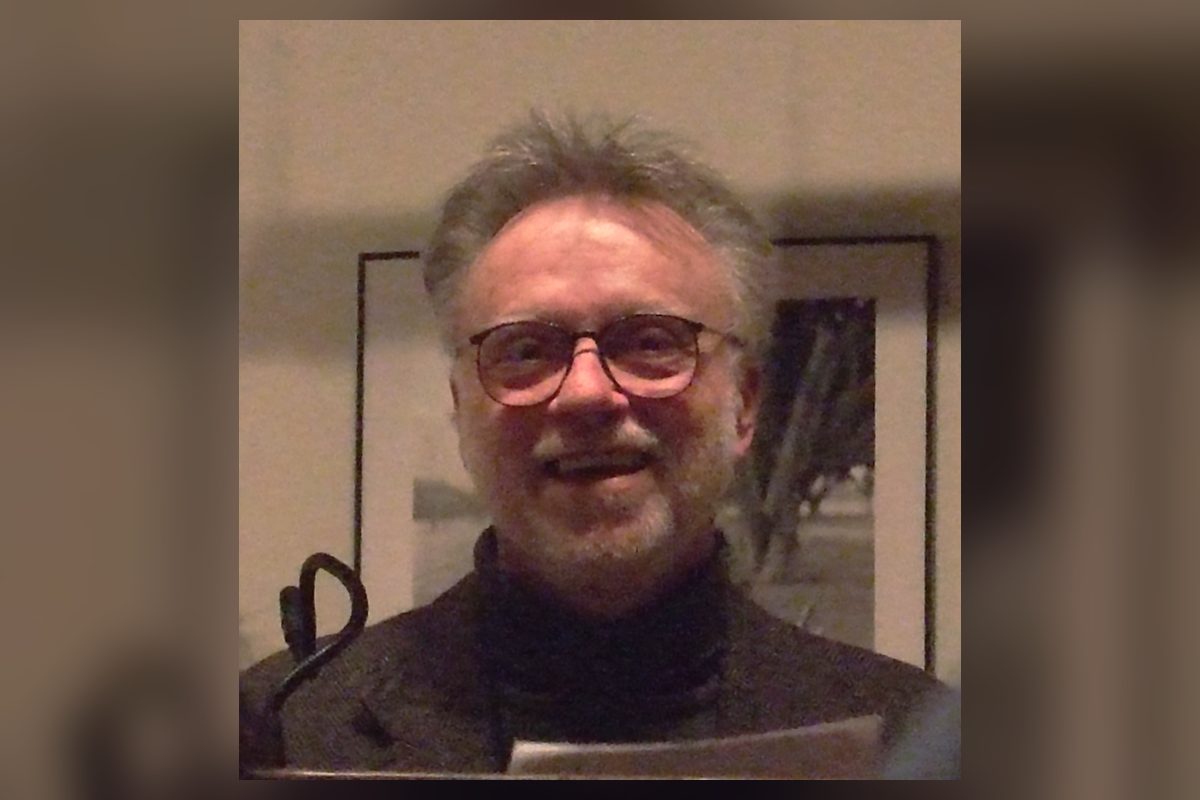
John Crowley, the novelist whose book Little, Big won the World Fantasy Award and convinced critics who did not ordinarily read fantasy to treat it as literature, died on August 8, 2026, according to Locus, at his home in Conway, Massachusetts. He was 83. His wife, Laurie Block, told The New York Times that the cause was complications of dysphasia and dementia. Locus reported his death on August 10.
The New York Times, in an obituary by Clay Risen, described him as the author of 14 novels and 10 volumes of essays and short fiction. Harold Bloom called Little, Big a "neglected masterpiece" and "literally the most enchanting 20th-century book I know." Ursula K. Le Guin said it "calls for a redefinition of fantasy." Writing in the Washington Post in 2000, Michael Dirda called Crowley "arguably the most original and accomplished American fantasy writer ever."
A novel that changed what fantasy was allowed to be
Little, Big, published in 1981, was his fourth novel and the one most readers know. It traces the long marriage of Smoky Barnable and Daily Alice Drinkwater through urban decline, a fascist turn in the United States, and a rural house that opens onto a realm of fairies. It begins: "On a certain day in June, 19 —, a young man was making his way on foot northward from the great City to a town or place called Edgewood, that he had been told of but had never visited." It was named best novel at the 1982 World Fantasy Awards. Locus records that it also won a Mythopoeic Award and was a finalist for the Hugo, the Nebula, the BSFA Award and the Seiun Award.
The books surrounding it show the breadth of his range. The Deep (1975), his first novel, is set on a disc-shaped world amid a war between Reds and Blacks, loosely based on the Wars of the Roses. Beasts (1976) and Engine Summer (1979) came next. The four-book Aegypt cycle, which began with Aegypt in 1987 (later republished as The Solitudes) and continued through Love & Sleep (1994), Daemonomania (2000) and Endless Things (2007), follows a historian named Pierce Moffett alongside a second story set in the Renaissance. Four Freedoms (2009) is a home-front novel about an Oklahoma airplane factory during the Second World War. Ka: Dar Oakley in the Ruin of Ymr (2017) follows a sentient crow through human history and won a Mythopoeic Award. Flint and Mirror was published in 2022.
He told The Believer in 2009 that the fiction that interested him "somehow manages to be convincingly actual — in the sense that you believe that truths are being told about the world you live in — and are also somehow connected to the imaginary in some way." He told Locus in 2010 that fantasy, at its best, is "about making true fictions by the rules, in worlds you make up out of whole cloth, or out of your heart."
Prizes accumulated alongside the novels. Locus notes a World Fantasy Award for the novella "Great Work of Time" (1991), a World Fantasy Award for the collection Novelty (1989), an American Academy of Arts and Letters Award in Literature in 1992, and a World Fantasy Award for Life Achievement in 2006. The poet James Merrill admired Little, Big enough to arrange a grant from the Ingram Merrill Foundation.
A lecturer because the English faculty already believed the books
The New York Times gives his full name as John Michael Crowley. He was born on December 1, 1942, in Presque Isle, Maine, where his father, Joseph, was an Army doctor. His mother, Patience (Lyon) Crowley, ran the household and later worked as a librarian. The family moved with Joseph's work, through Vermont and eastern Kentucky, before settling in Indiana. Crowley studied English at Indiana University. As a freshman, he was a member of the quiz team that won the 1961 GE College Bowl. He graduated in 1965 and moved to New York, where he wrote documentary screenplays, including The World of Tomorrow (1984), about the 1939 World's Fair.
He relocated to western Massachusetts in the mid-1970s and began publishing fiction while continuing to write films. With Block he founded Straight Ahead Pictures. Their film Fit: Episodes in the History of the Body (1991) examined American fitness culture. The two married in 1984.
In 1993 he became a lecturer at Yale, with help from two admirers already on the English faculty, the poet John Hollander and Bloom. He retired in 2018. He is survived by Block, their children, Hazel and Zander Crowley, and his sister, Jo Busha.
Image: John Crowley at South Street Seaport, New York, February 6, 2007. Photo by Houari Boumedienne, via Wikimedia Commons, licensed CC BY-SA 2.0. Placed on a blurred extension of the same photo.

Sources
- The New York Times, via The Philadelphia Inquirer: John Crowley, whose fantasy novels blurred reality and dream, dies at 83 (August 14, 2026)
- Locus: John Crowley (1942 to 2026) (August 10, 2026)