The Publishing Times
All the News That’s Fit to Publish
publishing-news · Guides
Deckle Now Lets Authors Try the Whole App Free and Keeps a Record of How Each Book Was Written
Deckle 1.7 lets authors try every feature free before buying, and its new Chronicle logs when and how a book was written. Here's what changed.
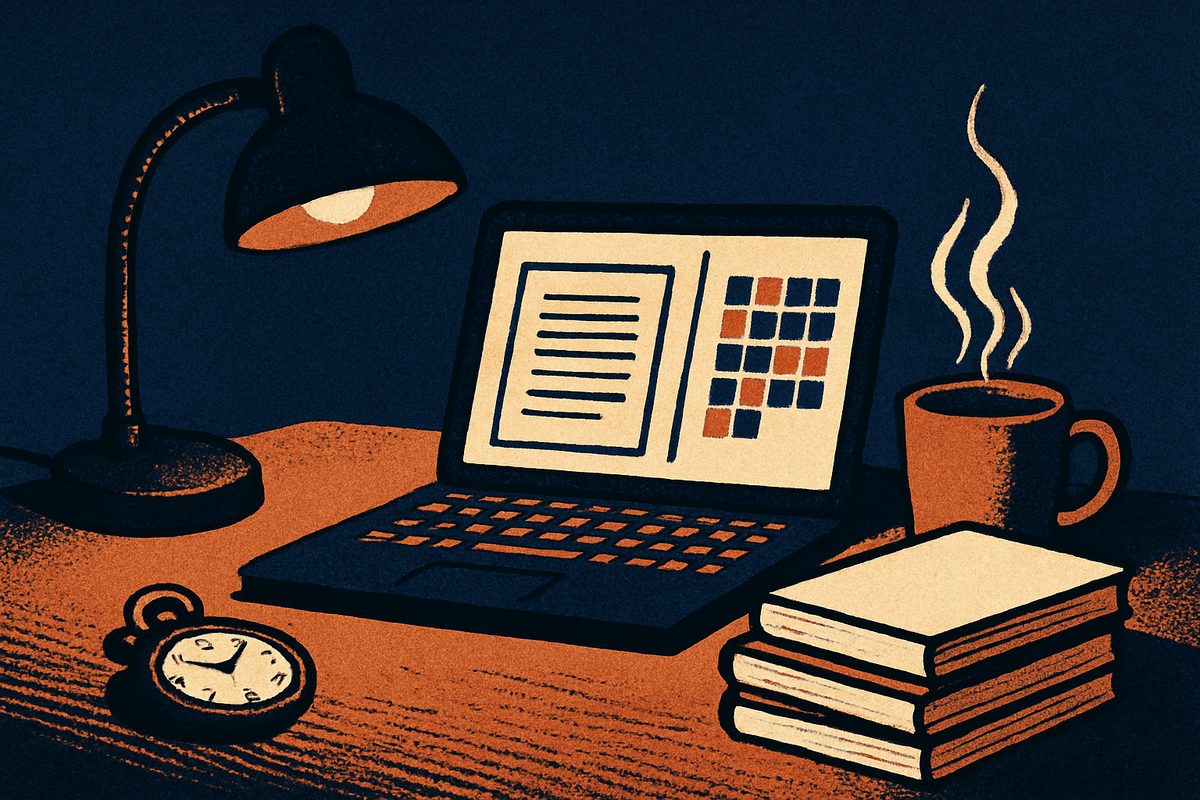
What changed in Deckle 1.7? Authors can now use every feature of Deckle, the all-in-one writing and formatting app, before they pay for it. The same release adds Chronicle, a background log of writing sessions that authors can point to if anyone asks how their book was written.
A trial with no card and no clock
Deckle released version 1.7 on September 21. A "Take Deckle for a Spin" button on the welcome screen opens the full app, including the export engine that produces finished books, along with a guided tour. The company says the trial needs no card or account and has no time limit. There are two limits. The trial caps how much new writing you can add, and you need a license to start a project of your own.
After the trial, Deckle is a one-time purchase of $197 with future updates included. Its homepage says one license covers any two devices on Windows, Mac or Linux, and that purchases come with a 30-day money-back guarantee.
Chronicle: a dated record of the work
According to Deckle, Chronicle "keeps a record of how your book was written." It logs each writing session in the background and maps it to the day it happened. Authors click a day on a heatmap to see what they wrote. The company says the data never leaves the author's computer.
Chronicle builds on tracking Deckle added earlier. Since version 1.5 in July, the app has counted typed words separately from pasted ones. Its goals guide says pasted text is "always tracked separately," and a toggle decides whether it counts toward goals, streaks and history charts.
The rest of 1.7
- Citations. Enter a source once and cite it repeatedly. Deckle writes the short forms and builds the reference list in Chicago, APA, MLA, IEEE and other styles.
- Partial exports. Tick the chapters an agent asked for and export just those, without changing the full-book settings.
- Typesetting. New options include drop caps with small caps, running heads in their own font, page numbering that restarts each chapter, and dialogue that stays with its speaker across a page break.
- Planning tools. The Codex (Deckle's story bible) and Timeline have been rebuilt, and character sheets now export as typeset PDFs.
Four releases since July
Deckle launched in early access on May 27 for Windows and Mac at $107. Since then it has shipped quickly:
- 1.4 (July 3): full Scrivener project import, including research, notes and nested folders; a built-in spellchecker with a personal dictionary that keeps invented names; and native Linux packages.
- 1.5 (July 30): a swim-lane story timeline, a rebuilt Codex, writing goals and streaks, footnotes and endnotes, and a Standard Manuscript Format Word export for agent and publisher submissions.
- 1.6 (August 8): selective compiling, which lets an alternate draft or an unfinished chapter sit in the manuscript without going into the export, plus Codex filters and a more flexible Outliner.
Deckle pitches itself directly against the usual two-app setup. Its homepage compares its $197 price with Scrivener ($59.99) plus Vellum ($249.99, Mac only).
AI agents and writing apps
A growing number of authors use AI agents for production chores, such as adding a new-release ad to the back matter of every ebook in a catalog. Agents usually connect to software through the Model Context Protocol (MCP). Deckle's release notes don't mention MCP support.
Scrivener users have options, but none of them come from Literature & Latte. Open-source projects such as scrivener-mcp let AI assistants read and edit Scrivener 3 projects. In a thread on Literature & Latte's forum, one reply recommends Scrivener's Sync with External Folder feature as the way to give outside tools access to a project, and others note that editing a project's files directly isn't supported. Back up your projects before trying any of these tools.
Why it matters for authors
As The Publishing Times noted in September, KDP asks authors to disclose AI-generated content, and the U.S. Copyright Office protects only human authorship. A session log doesn't prove a book was written without AI, and Deckle doesn't claim it does. It is a record made while the work happened, which is easier to trust than a statement written afterward. The same data also feeds Deckle's word-count goals, streaks and sprint timer, so it works as a productivity tool too.
If you have been curious about Deckle, you can now try the whole app, including export, at no cost. Whatever you write in, start keeping a dated record of your drafts now. A log made while you work is the simplest evidence you can offer if anyone asks how your book was written.
Sources
- Deckle: Deckle 1.7: Use the Whole App Free, Then Decide (September 21, 2026)
- Deckle: Homepage and pricing
- Deckle: Deckle 1.6 press release (August 8, 2026)
- Deckle: Deckle 1.5 press release (July 30, 2026)
- Deckle: Deckle 1.4 press release (July 3, 2026)
- Deckle: Launch press release (May 27, 2026)
- Deckle Wiki: Writing Goals & Stats
- GitHub: writerslogic/scrivener-mcp
- Literature & Latte Forums: Using Claude Code as a writing assistant for Scrivener
- The Publishing Times: How to Prove You Wrote Your Book (September 25, 2026)