The Publishing Times
All the News That’s Fit to Publish
publishing-news · Guides
Christie's Will Sell the Book of Miracles in London
Christie's will sell the Book of Miracles, an Augsburg manuscript of 167 miniatures, in London on 10 December 2026.
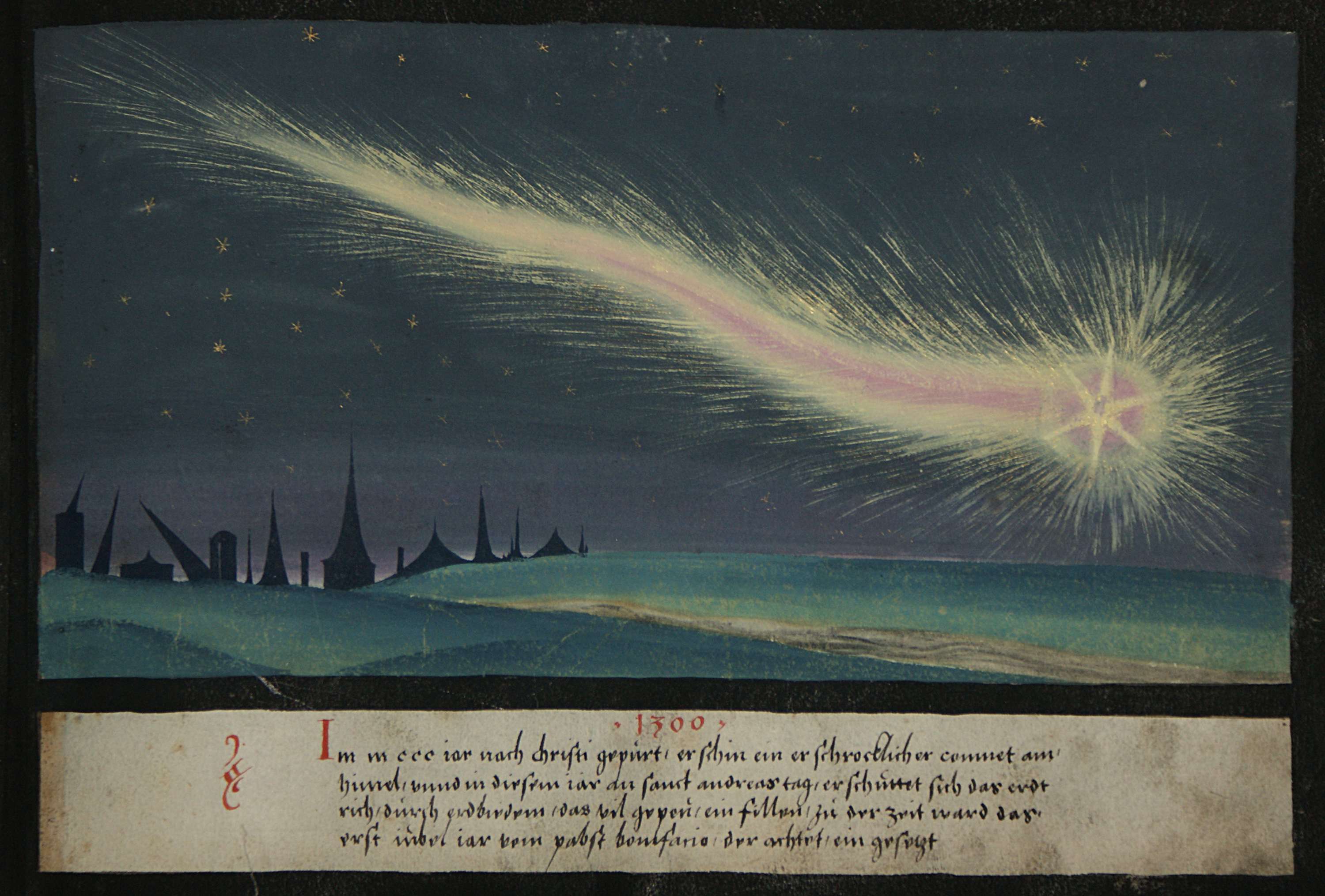
Christie's will sell the Book of Miracles in London on 10 December 2026, with an estimate of £700,000 to £1,000,000. The house's release, dated 16 November, says the manuscript was made in Augsburg around 1552 and holds 167 painted miniatures of comets, monsters, natural phenomena and the Apocalypse. The book, also called the Augsburger Wunderzeichenbuch, leads the Valuable Books and Manuscripts auction at King Street, at 12pm GMT.
What the pages show
The release describes a picture chronicle that starts with the Creation and runs through biblical events, ancient and medieval history, things that were current when the book was made, and the Apocalypse. Multiple suns, blood-red moons and fiery comets sit beside floods, earthquakes, storms, locusts, volcanic eruptions, dragons and monstrous births. Two of the dated scenes are a celestial phenomenon seen in Augsburg in 1541 and a hailstorm in Dordrecht in 1552. The manuscript is attributed to Hans Burgkmair the Younger, Heinrich Vogtherr the Younger and their workshops. Captions refer to events taking place "here in Augsburg".
Donna Ferguson's report in The Guardian, published the same morning, says this is the only known copy, and that no one is sure why it was made. One painting shows five suns over Leipzig in 1551. Another shows blood rain over Rome in 1456. A third, dated 1552, shows hail over Dordrecht in a storm so fierce that people feared Judgment Day had come. The report says the book holds 167 paintings of apocalyptic visions, celestial wonders and weather. The Guardian's figure for the estimate is £700,000 to £1m.
Where it was before this sale
Scholars did not know of the book for nearly half a millennium, The Guardian says. It turned up in the library of a small baroque castle in southern Germany nearly 20 years ago. In 2008 it was auctioned with the castle's furniture, carpets and tankards, and it sold for just over £100,000. That report says the manuscript then went into the collection of Mickey Cartin, one of Connecticut's largest collectors of contemporary art.
The house gives a tighter chain. The release says the book had been in a private Bavarian collection, and that auctioneer and bookseller Hugo Ruef described it as coming from the library of a small South German Baroque castle. It was sold at Kunstauktionhaus Hugo Ruef in Munich in July 2008, bought by James Faber of London in 2010, and after that entered Cartin's collection. Maev Kennedy, writing in The Art Newspaper the same day, says Cartin bought it in 2010, three years after it was found again in a private collection in Bavaria.
What Donadoni and Borchert said
Eugenio Donadoni, the house's international specialist in medieval and Renaissance manuscripts, told The Guardian the book was an "exceptionally rare" German wonderbook. "German wonderbooks functioned as the sensationalist mass media of their day," he said. He described locusts arriving in Poland on a "terrible wind" in 1527, and the North Sea flooding Frisia in 1230, in what is now the Netherlands and Germany. Scholars think a painting of "wondrous dragons" over Bavaria in 1533 shows the northern lights.
The five suns over Leipzig, the report says, are thought to be a parhelion, also called a sun dog. "You see in the sky various different rings of light and it looks like suns," Donadoni said. Blood rain, it says, happens when a high concentration of red dust, usually from the Sahara, mixes with rain. "Many of these things have actual rational scientific explanations to them," he said. "I think it could be a little like the 16th-century version of doomscrolling."
In the release he said, "The Book of Miracles is an extraordinary window onto the Renaissance imagination." The 167 miniatures, he said there, gather comets, eclipses, floods, monstrous births and visions of the Apocalypse. The book will be on view in London from 4 to 10 December 2026.
Till-Holger Borchert, director of the Suermondt Ludwig Museum in Aachen, told The Guardian he had studied the manuscript. The first time he saw it, his reaction was "Wow". "It's one of a kind," he said. "It grabs you by your heart or your soul or your belly." He called £1m a "very conservative estimate", and said the price could possibly be much more. A facsimile in 2013, he said, got people "really excited", and the book has become "a kind of icon for people who are interested in apocalyptic things". He added, "It's more than that. It speaks to us, to our generation."
Cartin and the other lots
Kennedy's report says the pictures are watercolours, and that Burgkmair and Vogtherr kept separate workshops. Cartin, who lives in Connecticut, built his grandfather's electrical supply firm into a national company and began collecting in the 1980s. Artnews put him on its Top 200 Collectors list every year from 2007 to 2013. The release also estimates Georg Bartisch's 1583 Ophthalmodouleia, which it calls the first modern book on eye surgery, at £70,000 to £100,000, and a 1940 Einstein manuscript at £300,000 to £400,000. It calls that manuscript one of the longest of his ever offered at auction.
Photo: Folio 52 of the Augsburg Book of Miracles, a comet, painted around 1552 and attributed to Heinrich Vogtherr the Younger or Hans Burgkmair the Younger. Public domain, via Wikimedia Commons.
