The Publishing Times
All the News That’s Fit to Publish
publishing-news · Guides
British Library to Outsource Security and Reading Rooms
Almost 70 British Library guards are to transfer to contractor STM on 1 December, and three reading rooms are set to become paid workspace.
Almost 70 British Library security guards have been told their jobs will transfer to a private contractor, STM, on 1 December. Dalya Alberge reported that in The Guardian on 20 November 2026. The report says their union, the PCS, has been informed that STM has rejected union recognition for those staff. The union is balloting for strike action over what it describes as management's "appalling approach to industrial relations".
Who is affected, and what the union is asking
The staff include guards, supervisors and managers, The Guardian says. The library holds more than 150m items, including a copy of Magna Carta.
Nick Marro, the PCS culture group secretary, said the Department for Digital, Culture, Media and Sport was understood to be investing up to £14m in renovating the reading rooms, "which the British Library is then going to immediately privatise". That account is in The Guardian. He called it "absolutely ridiculous" and said it raises questions about publicly funded cultural institutions, the treatment of workers, and "the government's own commitments on insourcing and trade union rights."
Fran Heathcote, the PCS general secretary, has written to Lisa Nandy, the culture secretary, calling for her "swift intervention", The Guardian reports. The letter, which the report says it has seen, reads: "What on earth is a government department doing investing in a resource only to privatise it, and outsourcing workers and stripping them of union recognition?" Heathcote also pointed to Louise Haigh, the first secretary, and the pre-election pledge of "the biggest wave of insourcing in a generation".
What the library says it will do with the rooms
Three of the library's 11 Reading Rooms, including the Science and Social Science Reading Rooms at St Pancras, are to become flexible business workspace, according to the library's own questions page, dated 16 November 2026. The physical spaces stay as they are until summer 2027 at the earliest. The St Pancras site has over 1,400 Reading Room desks, and the page puts the share affected at around 20%. Over 1,100 seats remain in eight other Reading Rooms.
The Guardian describes the proposal as closing three of 11 reading rooms, the science and social science spaces, and turning them into a privately operated "flexible business workspace". Sources quoted in that report believe the closure will involve the loss of 340 reader desks.
The library page cites "huge demand in London for high-quality workspace" in the Knowledge Quarter, and says the income will help keep Reading Room access free.
The deficit the library cites
The page says the library is running a financial deficit. Real-terms government funding has reduced by a third compared with 2010. This year the library expects to spend around £7 million more than its total income. Without action, it says, the recurring deficit is forecast to grow to over £8 million in 2027-28 and nearly £11 million the year after.
As online demand increases, in-person visits have dropped, the page says. There were around 162,000 Reader visits last year, down from almost 400,000 ten years ago. Over the same period there has been an 81% drop in the number of physical collections those Readers used.
The page says that income is how it plans to keep core services free.
Science collections, and the disputed fit-out cost
The library page says the commitment to science and social sciences "remains as strong as ever", and that services will move to other Reading Rooms at St Pancras while keeping the same specialist support. On overcrowding, it answers no.
Marro told The Guardian it was "already difficult to get a desk at the reading rooms", and that "Any time I'm in the building, it's hard to find a place to work." He called the library's account of falling use over the past five or 10 years "slightly disingenuous", because of "a catastrophic security attack where they lost complete access to their systems". The library has not said any jobs are at immediate risk of redundancy, he told The Guardian, but it has refused to rule out redundancies or a restructure. "It's impossible to envision a situation in which they're going to be closing reading rooms and losing hundreds of reader desks, without redundancies."
Paul Bate, the chief executive, told dozens of staff at a meeting last week that the department was providing multimillion-pound refurbishment funding, The Guardian says. The department denied the next day that the funding has been allocated, the report says. Documents the report says it has seen include an internal slide from a British Library presentation to staff. The slide states: "The cost of fitting out the space is £8m to £13m."
The library declined to confirm those figures and at first suggested it does not recognise them, The Guardian says. It said its "commitment to science remains steadfast". It also said: "The new space will enable businesses, researchers, entrepreneurs and innovators to work and collaborate at the heart of London's Knowledge Quarter, while generating income that can be reinvested in the library."
STM has been contacted for comment, The Guardian says. The questions page calls the plan's strategy Growing Knowledge, a refocused strategy for 2026 to 2032, and points to a blog by Dr Paul Bate for the reasons.
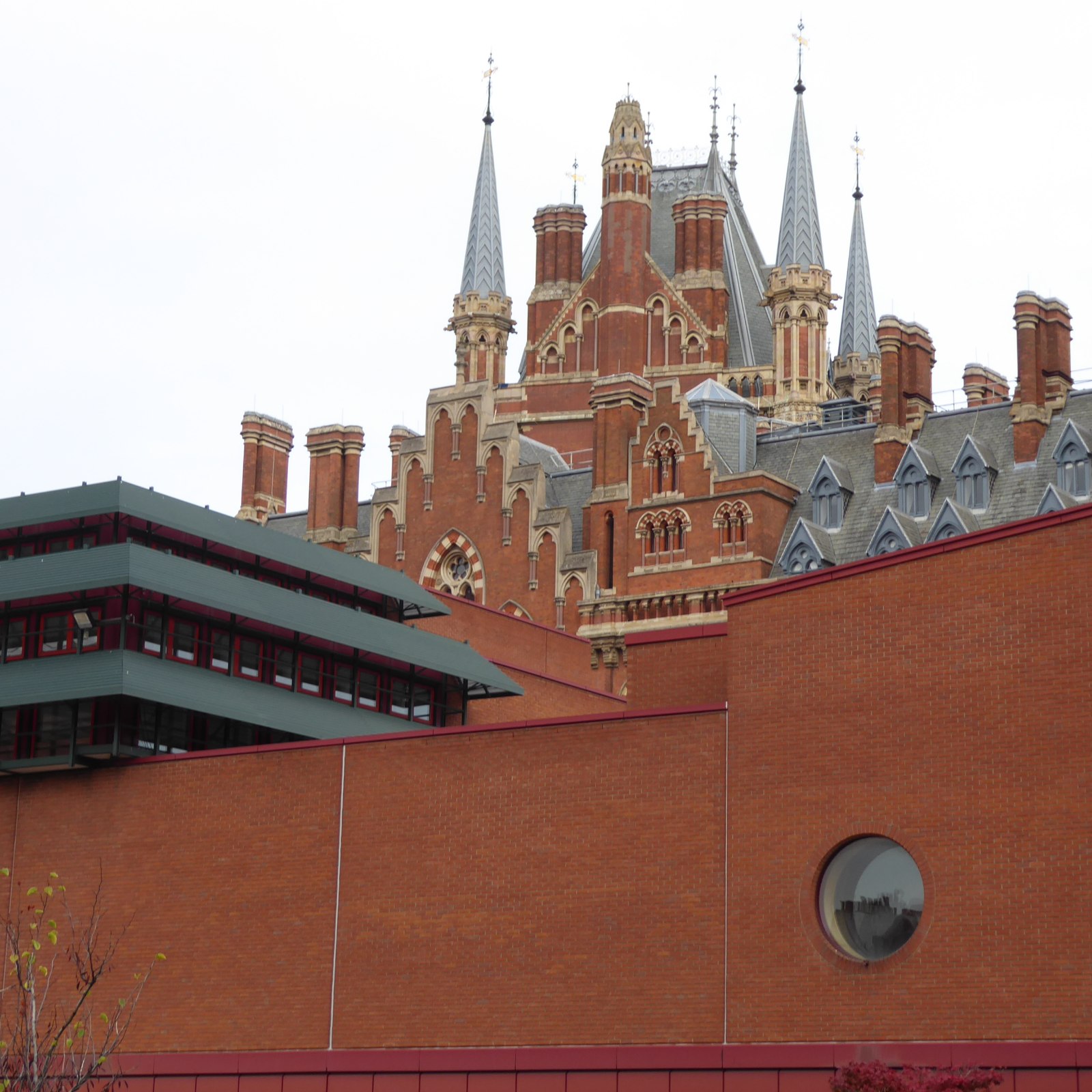
Photo: The British Library and St Pancras. Photo by Philip Halling, via Wikimedia Commons, CC BY-SA 2.0.
