The Publishing Times
All the News That’s Fit to Publish
publishing-news · Guides
Cherise Saywell Wins the BBC National Short Story Award for "Ditto"
Cherise Saywell won the 2026 BBC National Short Story Award for Ditto. The prize is £15,000. Eloise Barrett won the Young Writers' Award for Bloodshed in Rafah.
Who won the 2026 BBC National Short Story Award? Edinburgh-based writer Cherise Saywell, for "Ditto." The University of Cambridge said Saywell and Birmingham sixth former Eloise Barrett won the 2026 BBC National Short Story Award and the BBC Young Writers' Award, both with the University of Cambridge. The ceremony was on Tuesday, September 29, at BBC Broadcasting House, and it was broadcast live on BBC Radio 4's Front Row. Cambridge's headline calls them the 21st BBC Short Story Awards with Cambridge University.
The Guardian's September 29, 2026 report, by Emma Loffhagen, says Saywell took the £15,000 prize that Tuesday evening for a story the paper calls "tender" and "taut." Cambridge calls the National Short Story Award one of the most prestigious for a single short story. The winner receives £15,000. Each shortlisted author receives £600.
"Ditto"
Cambridge says the story is about a child's conflicting loyalties and a moment of bravery when violence erupts in his house. Judges called it "assured" and "beautifully crafted." They praised it for handling a child's understanding of a complex adult world with "precision" and "delicacy." It is set in a small Australian town inspired by where Saywell grew up, and it explores masculinity, domestic abuse, and its impact on children.
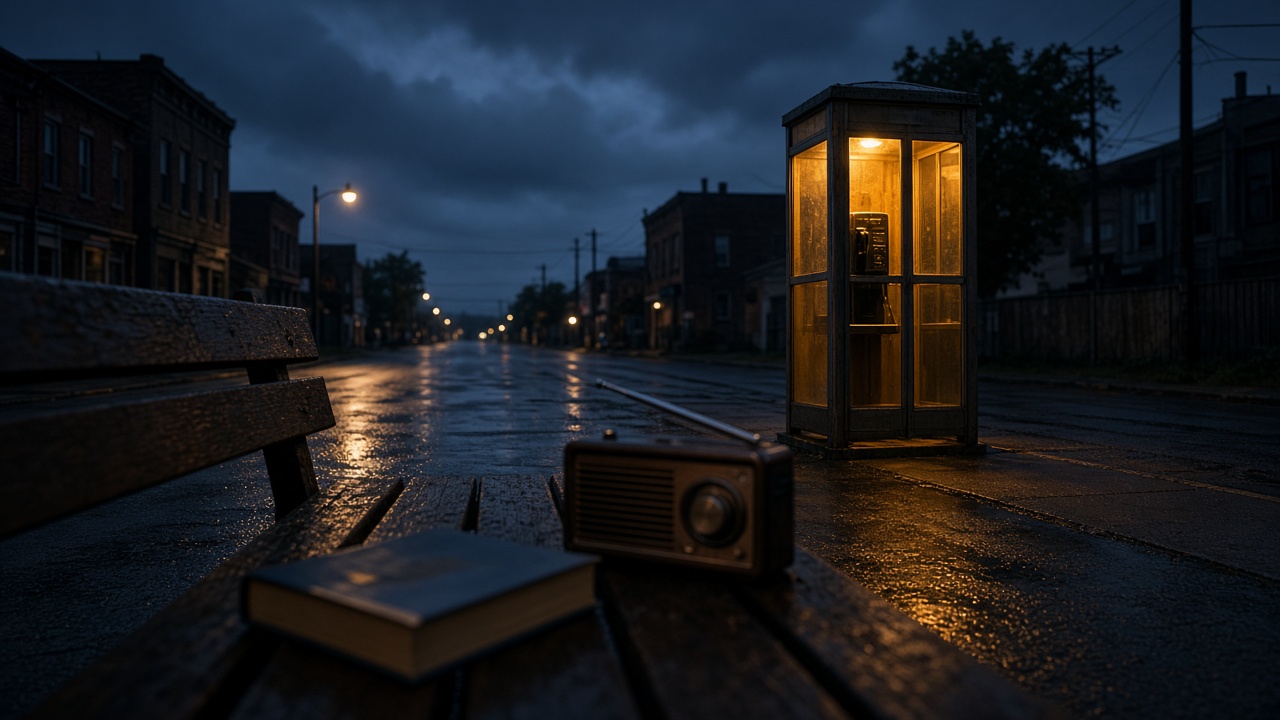
The Guardian says the story follows a boy nicknamed Ditto as he grapples with what to do when his mother is threatened, and he finds the courage to use a public telephone box to call the police. It is set in an isolated Australian town inspired by the place where Saywell grew up. The Guardian also printed an extract of the story. The details here are from its news report.
Saywell told Cambridge: "I wanted to find a way to write about how children experience violence, when they have no words for the things they are experiencing….They feel love and fear and responsibility all at the same time, but have no name for what's happening around them." The Guardian reports the same lines.
Di Speirs, chair of the judging panel, said in the Guardian: "Taut and beautifully crafted, tender and deeply rooted in one dusk evening and one small town, Saywell's story writing is assured and true and we are absolutely delighted that Ditto is this year's winner."
Dr Yvonne Battle-Felton, Academic Director of Creative Writing at the University of Cambridge's Institute for Professional and Continuing Education, said in the Cambridge announcement: "Full of vivid descriptions, mounting tensions, and a compelling character, 'Ditto' is a moving reminder of how much life a short story can hold, and what's simmering beneath the surface. It really is beautifully told."
Richard Goulding's reading of "Ditto" is on BBC Sounds, Cambridge says. The Guardian says the five stories are collected in a Comma Press anthology and are on BBC Sounds. Cambridge says each of the five is on BBC Sounds. The Guardian's piece also lists domestic-abuse helplines: 0808 2000 247 in the UK, 1-800-799-SAFE (7233) in the US, and 1800 737 732 in Australia.
The shortlist and the winner's record
Saywell beat Caoilinn Hughes, Lucy Caldwell, Laura Beatty, and Merryn Glover. The Guardian calls the shortlist all-female, notes that Lucy Caldwell won the award in 2021, and describes Laura Beatty as a biographer and novelist. Each shortlisted writer receives £600.
Speirs was joined on the panel, the Guardian reports, by 2022 winner Saba Sams, former shortlisted writers Tahmima Anam and Will Eaves, and Costa best first novel award winner Andrew Michael Hurley.
Saywell was born and raised in Australia and has lived in Scotland since 1996, the Guardian reports. She is the author of two novels, Desert Fish and Twitcher. Her short fiction has won the Pindrop short story award, the Mslexia short story prize, and the VS Pritchett prize, and she has been shortlisted for the Bristol prize and the Asham award. She works for the Royal Literary Fund. Cambridge calls her an Edinburgh-based writer.
Earlier winners, in the Guardian's list, include Sarah Hall, Jonathan Buckley, Lucy Caldwell, Ingrid Persaud, and Saba Sams. Last year Colwill Brown won for "You Cannot Thread a Moving Needle." Cambridge says the award with the university was established in 2006. The Guardian calls it one of the UK's major prizes for a single short story.
The Young Writers' Award
Eloise Barrett, a 17-year-old sixth former from Birmingham, won the BBC Young Writers' Award with the University of Cambridge for "Bloodshed in Rafah." Cambridge says the story follows a young girl in a refugee camp in Gaza as she grieves the loss of her mother and experiences her first period. Judges called it "heartwrenching," "original," and "nuanced." The Guardian uses "heartwrenching" and describes a childhood affected by war.
Barrett drew on research into women in conflict who lack access to period products, Cambridge says. She is studying English Literature, History, and Sociology at A Level, plans to study English at university, and is writing an anthology of feminist short stories and a horror novel. She topped a shortlist that included Siddhi Garg, Solly Day-Stokoe, Tom Ixer, and Nathan Karby. Imi Hasna reads the story on the BBC Young Writers' Award Showcase 2026.
Battle-Felton said: "A powerful example of how short stories can move the world. 'Bloodshed in Rafah' takes readers inside a geographical, psychological, emotional setting we may read about without seeing. It beautifully weaves love and loss with characters and scenes so gripping they will leave you breathless."
The award is in its twelfth year and is open to 14- to 18-year-olds across the UK. Cambridge says its partnership is supported by the Schools of Arts and Humanities and Humanities and Social Sciences, the Faculties of English and Education, Downing and Robinson Colleges, Cambridge University Library, the Fitzwilliam Museum, and the Institute for Professional and Continuing Education.
Why it matters for authors
The winner receives £15,000, and each shortlisted author receives £600, the rate both Cambridge and the Guardian print. Saywell's shortlist was Caoilinn Hughes, Lucy Caldwell, Laura Beatty, and Merryn Glover. Their stories are in a Comma Press anthology and on BBC Sounds. The prize with Cambridge dates to 2006. A separate award, in its twelfth year, is open to 14- to 18-year-olds in the UK. This year's winner is Eloise Barrett, for "Bloodshed in Rafah."
Sources
- University of Cambridge: Edinburgh writer and Birmingham student win 21st BBC Short Story Awards with Cambridge University (ceremony Tuesday, September 29, BBC Broadcasting House)
- Emma Loffhagen, The Guardian: Cherise Saywell wins national short story award for a story of a child facing violence (September 29, 2026)