The Publishing Times
All the News That’s Fit to Publish
publishing-news · Guides
National Book Award Finalist Says the U.S. Denied His Visa
Abdelrahman ElGendy, a National Book Award finalist for the memoir Huna, says the United States denied his visitor visa and did not tell him why.
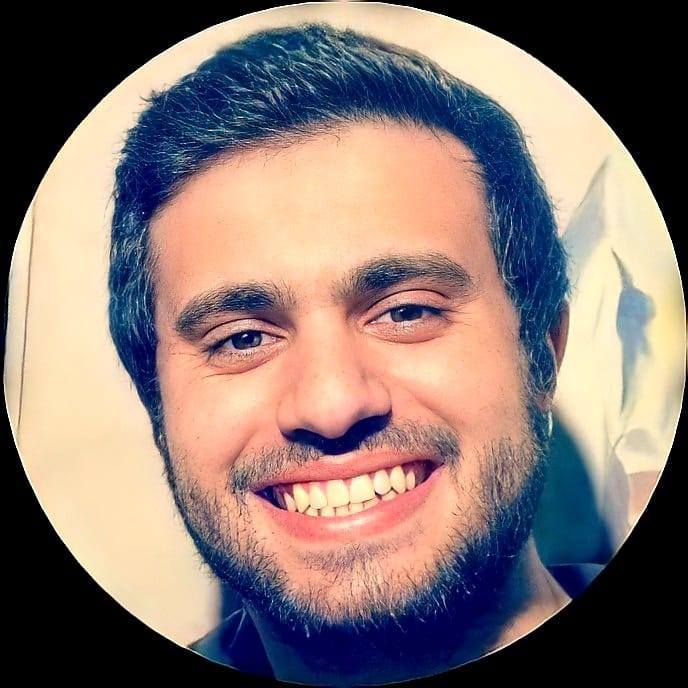
The United States refused Abdelrahman ElGendy the visitor visa he needed for the National Book Awards. He told The New Arab it gave him no reason.
The interview, published on 15 November 2026, says his publisher had already booked the trip and paid for it. His memoir Huna, about the years he spent in an Egyptian prison after he was arrested as a student protester, is a finalist. He said the United States never shares its reasons for a refusal, and that consular officers have wide discretion. "I think anyone familiar with this administration can make a pretty good guess," he said.
What he wrote about the interview
The account of the visa interview is his own, in The New Yorker on 13 November 2026. He wrote that Huna was a finalist for the National Book Award for Nonfiction, and that he had expected to attend the finalist reading and the ceremony in New York in mid-November. He had brought files: his publisher's invitation and itinerary, contacts for the publisher and the National Book Foundation, a 2023 New York Times article on his six years as a political prisoner, his European residence permit, and proof of book events in Britain and Europe.
He wrote that the officer congratulated him. "Such a huge accomplishment!" she said. She nodded, he wrote, at the Penguin Random House letterhead and at a printout from the National Book Foundation, and his flights and accommodation were already paid. Then she looked at her screen. "Unfortunately, I can't decide on this application now. We have to consult Washington first, then get back to you." He wrote that she placed the application in administrative processing, and that the decision would follow in writing. The next morning the denial arrived. It did not say what the system had flagged, or what Washington had said overnight. It said only that he was ineligible for a visitor visa under the Immigration and Nationality Act.
The book, the prize rules, and why he left
Huna comes out of those prison years. He wrote that he was jailed as a teenager for protesting the 2013 military coup, given a fifteen-year sentence, and released in 2020 after an appeal showed he had been tried as an adult rather than as a minor. For six years and three months he wrote, and he smuggled the pages out one visit at a time. In 2022 he received a full scholarship for an M.F.A. in nonfiction at the University of Pittsburgh, and he wrote that the three years there were essential to the book. He found an agent in 2023. The National Book Foundation widened eligibility in 2024, after the Pulitzer Prize Board had opened some categories in 2023 to authors with permanent residence or a long-term home in the United States.
When the offer for Huna arrived from Hogarth, an imprint of Penguin Random House, in 2024, his agent called to congratulate him. His first question, he wrote, was, "Can they write me a letter for an O-1 extraordinary-ability visa?" He was already worried about what would happen when his student visa ran out. He wrote that after Trump returned to office in 2025, and after 7 October, he had gone to campus rallies and had written for Foreign Policy and the Washington Post. He wrote that he had criticised the relationship between Egypt and the United States, and that he had argued that Israel was committing genocide in Gaza. Lawyers told him, he wrote, that an arrest was likely a matter of time. Deportation to Egypt, he wrote, could mean prison for the rest of his life. He left the United States in late April 2025, watched his M.F.A. graduation from a distance, and lost the chance to tour the country for the book. A call from a 212 number later told him he was a finalist.
What he said on 15 November
In the New Arab interview he said he had entered and left the United States without trouble for three years, until Trump took office. "I continued to enter and exit the US without any issues for three years, right up until Trump came to power," he said. He suspects this refusal was different because he had spoken publicly about Palestine. "What has changed under this administration is that it is now widely known and reported that visa applicants are being scrutinised specifically for public criticism of the US government and for their activism in support of Palestine," he said. He told the paper the application was strong, that the publisher had covered the logistics, and that he also had letters from major cultural institutions. He said the only thing left was a catch-all justification of protecting national security.
He told The New Arab he would keep taking the memoir to readers in other countries. "Our identities and individual struggles should serve as entryways rather than as endpoints, so that we can build transnational solidarity across these very borders designed to crush our bodies," he said. "I will continue to focus on the global majority of readers, whom I think of as the book's intended audience." "When it's meant to be, it will happen."
Photo: Abdelrahman ElGendy, 7 August 2021. Photo by Abdelrahman ElGendy, via Wikimedia Commons, CC BY-SA 4.0.
