The Publishing Times
All the News That’s Fit to Publish
Industry Analysis · Guides
The Audio Revolution Comes for the Ebook Monopoly
As audiobook giants pivot into digital text, the stranglehold of legacy retail monopolies is finally facing a serious, long-overdue challenge.
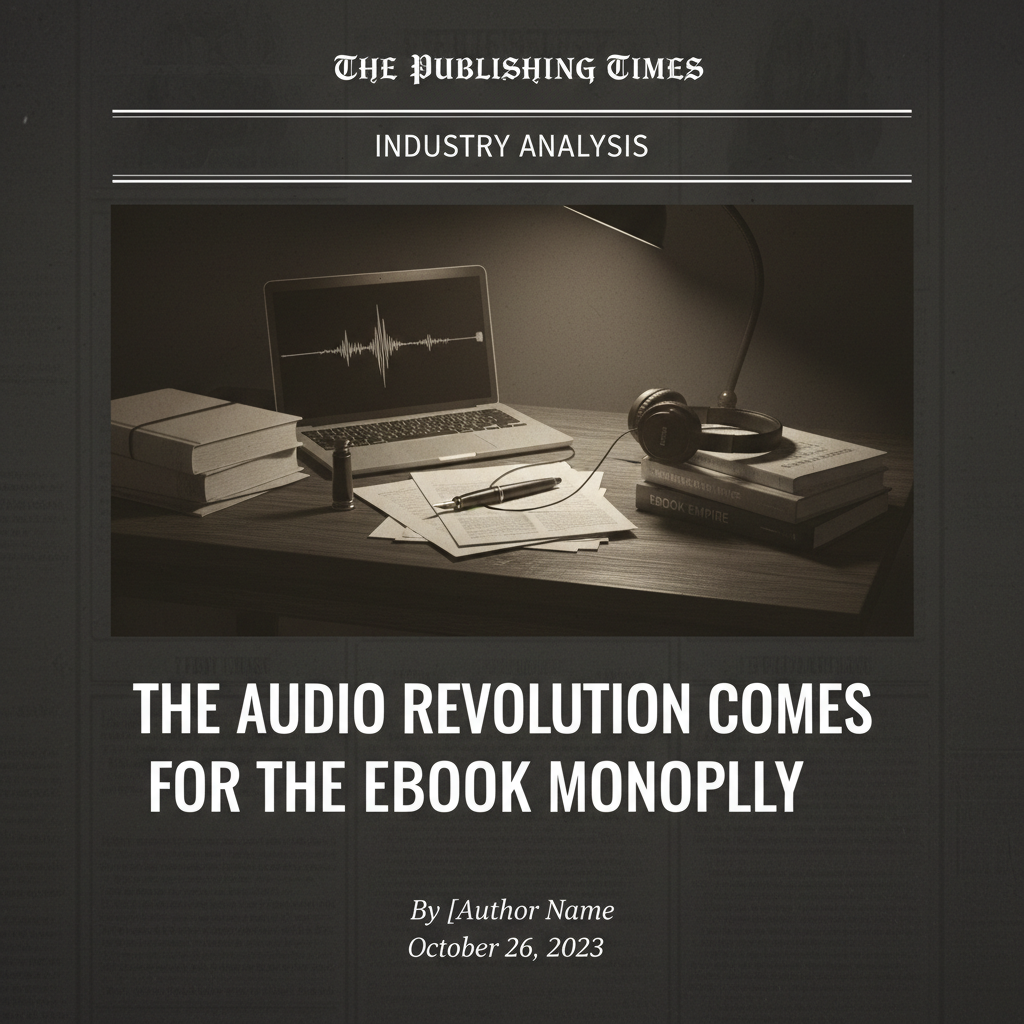
For too long, the digital reading landscape has resembled a feudal fiefdom. If you wanted to sell an ebook, you bowed to the Seattle sovereign and accepted whatever royalty crumbs fell from the master's table. High commission rates and draconian exclusivity clauses have kept indie authors and small presses shackled to a single dominant player. But the publishing ecosystem is shifting in real time. Dynamic audiobook platforms are branching into ebooks, injecting much-needed competition into a stagnant retail market.
This is not merely about convenience; it is a structural realignment. Readers increasingly consume stories across formats, toggling between narration during their morning commute and text under the bedside lamp. Platforms built on ear-first engagement realize they are uniquely positioned to capture the entire lifecycle of a reader's attention. By bundling audio and digital text under unified ecosystems, these aggressive newcomers are bypassing traditional gatekeepers and offering a viable alternative to the reigning titans.
## Breaking the Digital Duopoly
Legacy retail monopolies thrive on friction. They want authors locked in and readers corralled into proprietary apps that discourage cross-platform browsing. When an audiobook specialist decides to stock digital text, the entire economic calculus changes. Authors looking to diversify their income streams now have a legitimate storefront that treats text and audio as equal partners rather than secondary afterthoughts. This evolution mirrors how smart consumers discover everything from niche poetry to breakout hits; you can even [explore top-rated indie titles on Amazon](https://amazon.com/books) to see how independent publishing continues to adapt to these shifting retail battlegrounds.
Crucially, this retail diversification benefits the creative class. Monopolies breed complacency, resulting in falling discoverability and arbitrary algorithmic penalties for authors who dare to cross-promote. When alternative platforms enter the ring with lower take-rates and robust customer bases, legacy monoliths are forced to sharpen their pencils and improve their terms. Competition is the ultimate antidote to corporate arrogance.
## What This Means for Publishers and Indie Authors
If you are an indie author or an indie press editor, your strategy must evolve beyond single-platform dependency. Widening your distribution to include these burgeoning hybrid platforms is no longer optional experimentation—it is essential business insurance. The tools are becoming more sophisticated, and the audience is primed to follow their favorite narrators and authors onto fresh digital shelves.
The writing is on the wall, and it is being read aloud before being turned into digital ink. The era of unchallenged retail monopolies is drawing to a close, replaced by a more rugged, multi-format marketplace.
Don't wait for the old guard to hand you a better deal. Audit your distribution strategy today, upload your files to these emerging multi-format platforms, and take back control of your literary career.